
The first coins in history: Their design and use
Anúncios
Coins have been a fundamental part of human history, serving as a means of exchange and a reflection of ancient civilizations.
As one of the earliest forms of currency, the origins of coinage can be traced back to the ancient world, where the first coins were minted and used for various transactions.
These coins not only facilitated economic activities but also provided a valuable source of information for historians and numismatists, revealing insights into the language, administration, religion, and economic conditions of the past.
The earliest known coins from the ancient world were discovered in the great temple of Artemis in Ephesus, dating back to the 8th century BCE.
These coins, made of electrum, a naturally occurring alloy of gold and silver, were too valuable for everyday transactions, with even the smallest-denomination coins worth about a day’s subsistence. The evolution from barter to early currency systems, such as the use of cattle, implements, and metal bars as mediums of exchange, paved the way for the introduction of these first coins.
Anúncios
The advent of coinage marked a significant shift in the way societies conducted economic activities, revolutionizing the way people exchanged goods and services.
As the practice of minting coins spread across ancient civilizations, it became a testament to the ingenuity and innovation of our ancestors, who developed increasingly sophisticated techniques to produce these valuable pieces of currency.
The Evolution from Barter to Early Currency Systems
The history of money is a fascinating journey, tracing the transition from primitive currencies to more sophisticated exchange systems. Before the advent of formal currency, societies relied on barter – the direct exchange of goods and services.
However, the limitations of barter, such as the need for a “double coincidence of wants,” paved the way for the emergence of early currency systems.
In ancient civilizations, various commodities served as commodity money, including cattle, salt, cowry shells, and even tobacco. Metal, particularly gold and silver, soon became the preferred form of currency due to its treasurability, divisibility, ease of transportation, and aesthetic appeal.
The first coins resembling modern currency appeared in the 7th century B.C., minted in ancient Lydia (present-day Turkey).
As the use of coins spread, so did the evolution of currency systems. Ancient Egypt, Greece, and Rome all developed their own distinctive coinage, each with unique designs and symbols.
The transition to paper money occurred during the Yuan dynasty in China, around 1260 CE, and the gold standard was established in the 1870s, further shaping the global monetary landscape.
Today, the world’s monetary systems continue to evolve, with the emergence of digital currencies like Bitcoin, which had a market capitalization of over $1.14 trillion as of August 2024.
This dynamic history of money, from primitive currencies to advanced digital systems, reflects the ingenuity and adaptability of human civilization in facilitating economic exchange.
| Currency Evolution Milestones | Key Developments |
|---|---|
| Barter | Direct exchange of goods and services |
| Commodity Money | Cattle, salt, cowry shells, tobacco, and other valuable items used as currency |
| Coinage | First coins minted in ancient Lydia around 600 BCE, made of gold, silver, and copper |
| Paper Money | Originated from receipts issued by goldsmiths, became common during the Yuan dynasty in China (1260 CE) |
| Gold Standard | Established in the 1870s, linking currency values to gold reserves |
| Digital Currencies | Emergence of cryptocurrencies like Bitcoin, with a market capitalization of over $1.14 trillion as of August 2024 |
The evolution from barter to early currency systems marks a significant milestone in human economic development, paving the way for more sophisticated financial frameworks and the continued transformation of how we exchange value.
The Birth of Coinage in Ancient Lydia
The origins of true coinage can be traced back to ancient Lydia, a kingdom located in the region of Asia Minor (modern-day Turkey). Around 650 BCE, the Lydians pioneered the use of stamped pieces of electrum, a naturally occurring alloy of gold and silver, as a means of facilitating trade and exchange.
One of the most significant figures in the development of Lydian coinage was King Croesus (560-546 BCE), who introduced a bimetallic system of pure gold and silver coins. Prior to this, the Lydians had used electrum coins, which were produced from the naturally occurring gold-silver alloy found in the region’s streams and mines.
The Lydian electrum coins were noteworthy for their standardized weight and the stamped designs that served as a guarantee of authority and authenticity. This innovative approach to currency revolutionized trade and commerce, allowing for more efficient transactions and the dissemination of cultural and symbolic messages through the imagery on the coins.
The Lydian coins quickly gained widespread acceptance, and their influence spread across the Greek cities of Asia Minor.
This early coinage system laid the foundation for the development of more sophisticated monetary systems in the ancient world, paving the way for the widespread adoption of coinage as a medium of exchange.
The First Coins in History: The Lydian Lion Coins
The journey of coinage began with the groundbreaking Lydian Lion coins, minted by King Alyattes of Lydia (modern-day western Turkey) around 610-560 BCE. These coins, considered the oldest in the world, were made of electrum, a naturally occurring alloy of gold and silver.
The Lydian Lion coins were stamped with the facing heads of a lion and a bull, representing the power and wealth of the Lydian Kingdom.
These bean-shaped pieces featured a relief design on one side and a rough impression on the reverse, with a standardized weight of 7-8 grams. The royal lion symbol served as a declaration of their value and authenticity.
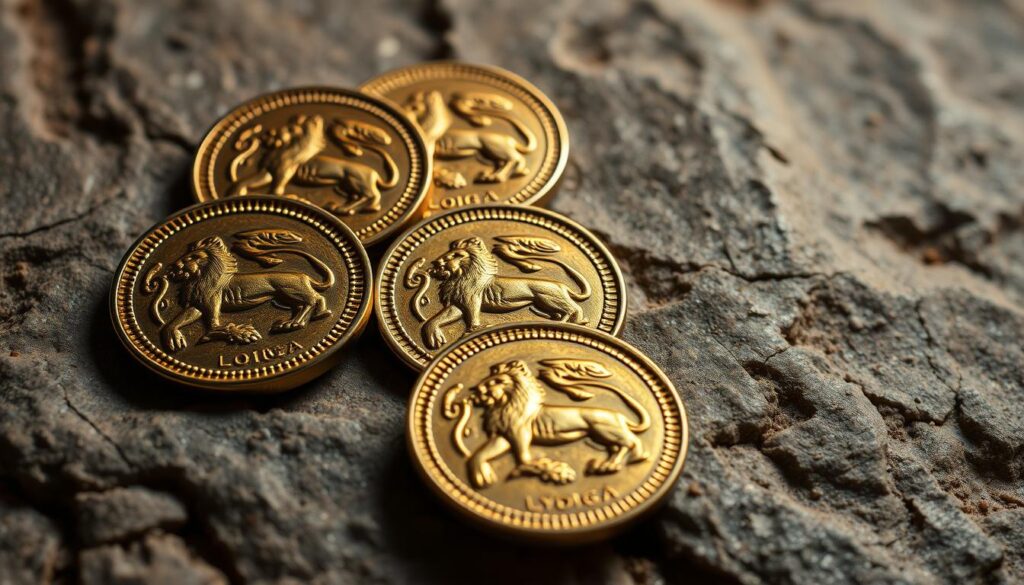
The introduction of these electrum coins marked a significant shift from the barter system to the emergence of a standardized currency. The Lydian Lion coins were not only used within the Kingdom of Lydia but also gained widespread acceptance as a medium of exchange across ancient civilizations, paving the way for the future development of coinage.
| Coin Name | Origin | Date | Material | Significance |
|---|---|---|---|---|
| Lydian Lion Coins | Kingdom of Lydia (modern-day western Turkey) | Around 610-560 BCE | Electrum (natural gold-silver alloy) | Considered the oldest coins in the world, marked the transition from barter to standardized currency. |
The Lydian Lion coins, with their distinctive lion and bull design, represented the culmination of a long journey from primitive barter to the establishment of a more sophisticated monetary system. These pioneering coins not only served as a medium of exchange but also reflected the cultural and economic power of the Lydian Kingdom under the rule of King Alyattes.
Early Greek Coinage and Its Influence
The world of ancient Greek coinage is a fascinating chapter in the history of money. The first Greek coins appeared in Aegina around 600 BCE or even earlier, featuring a distinctive turtle design that symbolized prosperity based on maritime trade. Soon, other city-states like Athens and Corinth followed suit, each with their unique coin designs and standards.
The Athenian silver owl tetradrachms, with their iconic image of the goddess Athena’s owl, became widespread and were found as far as Egypt, Palestine, Arabia, and Bactria. These coins were renowned for their exceptional purity and weight standards, a testament to the technical and aesthetic quality that characterized Greek coinage during the Classical period.
While silver and gold were the predominant materials, Greek cities also experimented with electrum, copper alloys, and even bronze coins for smaller transactions. The diverse array of designs on these coins, ranging from mythological figures to local symbols, provides a valuable historical record, aiding in the dating of artifacts, understanding trade relations, and gaining insights into the religious, agricultural, and architectural practices of the ancient Greek world.
The influence of Greek coinage spread far and wide, with the Aeginetan weight standard being adopted across the Peloponnese and the Aegean region. The development of fractional pieces and the introduction of double-relief coinage with civic deities and symbols further solidified the impact of Greek coinage on the ancient world.
| Coin Type | Design | Significance |
|---|---|---|
| Aegina Turtle Coins | Turtle | Earliest Greek coins, symbol of prosperity from maritime trade |
| Athenian Owls | Athena’s Owl | Renowned for their purity and weight, found in distant lands |
| Corinthian Pegasi | Pegasus | Unique design representing the city-state of Corinth |
The legacy of ancient Greek coinage is undeniable, as it not only facilitated trade and economic development but also served as a canvas for the expression of civic identity, religious beliefs, and cultural achievements. The enduring influence of these early coins continues to fascinate numismatists and historians alike.
Ancient Minting Techniques and Production Methods
The ancient art of coin production evolved over centuries, from the humble beginnings of hammering metal on an anvil to the sophisticated techniques we see today. The first coins, believed to have emerged in the 7th century BCE in the kingdom of Lydia, modern-day Turkey, were created using a manual minting process that involved heating metal, placing it on an anvil, and striking a die with a hammer to impress a design.
As the minting process advanced, techniques like hubbing were introduced, allowing for the production of perfectly round coins that were harder to counterfeit. However, challenges remained, such as die wear, rust, and inconsistent striking, which sometimes resulted in imperfectly struck coins.
The transition to mechanized minting, such as the introduction of the screw press in the 1550s, revolutionized the industry. This new technology enabled the simultaneous striking of both sides of a coin, increasing efficiency and consistency. Later innovations, like the steam-powered Soho Mint and the Uhlhorn Press, further streamlined the minting process, leading to increased production and automation.
| Minting Technique | Characteristics | Challenges |
|---|---|---|
| Anvil Striking | Manually heating metal, placing it on an anvil, and striking a die with a hammer to impress a design. | Inconsistent striking, die wear, and rust. |
| Hubbing | The introduction of a hubbing technique allowed for the production of perfectly round coins that were harder to counterfeit. | Balancing the precision of the hubbing process with the need for high production volume. |
| Mechanized Minting | The screw press, steam-powered mints, and the Uhlhorn Press revolutionized the minting process, increasing efficiency and consistency. | Adapting new technologies to the demands of large-scale coin production. |
The evolution of coin dies, anvil striking, hubbing, and hammered coinage techniques has played a crucial role in the development of the modern minting industry. Each innovation has brought about new challenges and opportunities, ultimately shaping the way we produce and secure our currency today.
“Throughout history, mints have reflected the highest technology available to societies, playing a vital role in the economic and monetary development of civilizations.”
Designs and Symbols in Early Coinage
The early coins of the ancient world were not just a medium of exchange, but a canvas for artistic expression and symbolic representation. From the iconic Lydian Lion coins to the intricate designs of ancient Greek coinage, these early numismatic treasures offer a glimpse into the rich cultural and historical tapestry of their time.
One of the defining features of ancient coins was the use of animal symbols, often reflecting the local fauna or mythological creatures revered by the issuing civilization. The Lydian staters, considered the world’s oldest coins, were minted around 600 BCE and featured the image of a mythical lion, a symbol of power and strength.
As coinage spread across the ancient world, civic emblems and religious iconography became increasingly common on coins. Greek city-states often featured symbols or images related to their patron deities, such as the owl of Athena on Athenian coins or the trident of Poseidon on coins from Corinth.
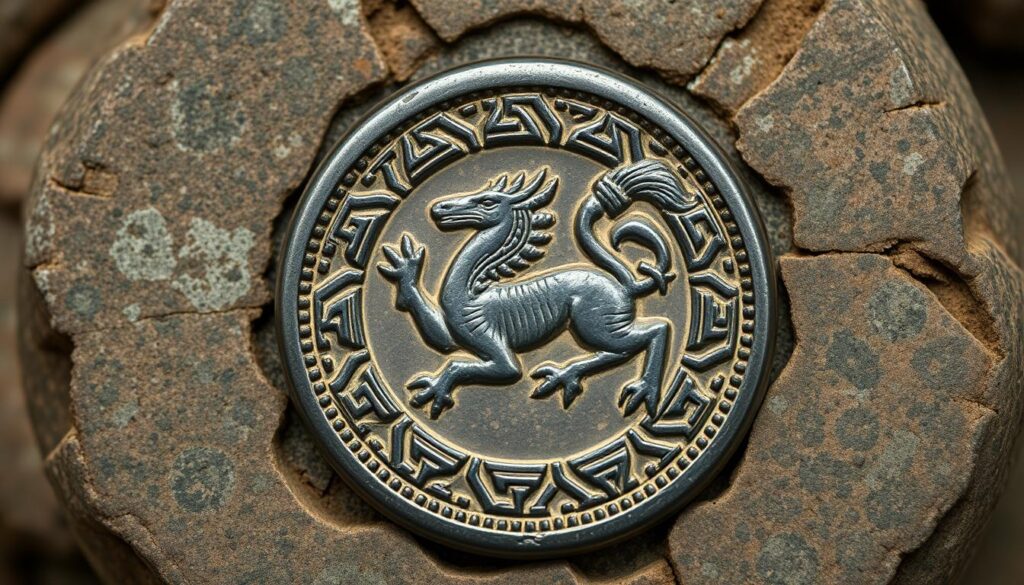
The evolution of coinage also saw the introduction of idealized deity heads, a trend that gained prominence during the Hellenistic period. These meticulously crafted portraits of gods and goddesses not only served as a symbol of the issuing authority but also reflected the growing artistic sophistication of ancient minting techniques.
Beyond the visual elements, ancient coins often bore inscriptions and legends that provided valuable information about the issuing authority, the coin’s value, or even historical events. These textual elements add a layer of depth and significance to the study of early coinage, offering insights into the cultural and political landscapes of their time.
The rich symbolism and artistic expression found on ancient coins continue to captivate collectors, historians, and numismatists alike, serving as a testament to the enduring legacy of these remarkable artifacts.
The Spread of Coinage Across Ancient Civilizations
The development and spread of coinage during the ancient era was a remarkable feat, showcasing the ingenuity and interconnectedness of civilizations across the world. As the Lydian kingdom pioneered the first standardized coins in the 7th century BCE, their influence quickly extended beyond Asia Minor, reaching the thriving regions of Magna Graecia, Sicily, and Thrace.
The expansive Persian Empire played a crucial role in the widespread adoption of coinage, minting vast quantities of gold and silver coins that facilitated trade and commerce across their vast territories. These coins, known for their high purity and distinctive designs, became a symbol of Persian power and prestige, and were eagerly embraced by the surrounding civilizations.
- The introduction of coins in Magna Graecia, a region of southern Italy, led to the development of varied and competitive currency systems, each city-state minting its own distinctive coins.
- In Sicily, the island’s strategic location and thriving trade networks accelerated the adoption of coinage, with the Sicilian cities producing a wide array of coins featuring intricate designs and symbols.
- The Thracian region, situated at the crossroads of ancient civilizations, also quickly embraced coinage, its diverse population and cultures contributing to the emergence of a rich and varied numismatic landscape.
As minting techniques evolved, the appearance of these ancient coins became increasingly sophisticated, with the introduction of inscriptions that referenced the issuing authorities. This development not only enhanced the visual appeal of the coins but also strengthened their legitimacy and acceptance across the ancient world.
| Region | Emergence of Coinage | Distinctive Features |
|---|---|---|
| Magna Graecia | Rapid adoption of coinage, leading to varied and competitive currency systems | Each city-state minting its own distinctive coins |
| Sicily | Accelerated adoption due to strategic location and thriving trade networks | Wide array of coins featuring intricate designs and symbols |
| Thrace | Quick embrace of coinage, influenced by the region’s diverse population and cultures | Emergence of a rich and varied numismatic landscape |
The spread of coinage across ancient civilizations was a testament to the interconnectedness of the ancient world, where the exchange of ideas, technologies, and trade networks played a pivotal role in shaping the evolution of monetary systems. This legacy continues to captivate historians, numismatists, and enthusiasts alike, offering a glimpse into the vibrant and dynamic economic and cultural landscape of the past.
Early Chinese and Eastern Coinage Systems
China boasts a rich history of currency evolution, with the emergence of some of the world’s earliest forms of coinage. The Tong Bei, discovered in a Shang dynasty tomb dating back to the 11th century BCE, is believed to be one of the first cast copper coins. Throughout the subsequent Warring States period and Han dynasty, coinage became increasingly widespread across China.
Chinese coins often featured a central hole, allowing them to be strung together for easy transport and storage. This design was a practical innovation that facilitated the use of cash coins in everyday transactions. Additionally, the development of knife money and spade money in various regions of China showcased the diversity of early Chinese coinage systems.
- During the Western Han period, an estimated average of 220 million coins were produced annually.
- Only six examples of Da Quan Wu Qian coins from the Eastern Wu dynasty (222–280) are known to exist, making them extremely rare.
- A hoard discovered in Jiangsu contained 4,000 Tai Qing Feng Le coins.
- Another hoard found at Zhangpu in Shaanxi included a sealed jar with 1,000 Ban Liang coins of various weights and sizes.
The history of Chinese currency dates back more than 3,000 years, with the earliest forms of currency being cowry shells used during the Neolithic period in Central China. The first emperor of China, Qin Shi Huang, later standardized the currency system by abolishing local currencies and introducing a uniform copper coin around 210 BCE.
“The Chinese likely invented the first metal coins before 900 BC.”
While paper money was invented in China as early as the 7th century, copper coins remained the chief denomination until the introduction of the yuan. Today, the Renminbi is the official currency of the People’s Republic of China, while Taiwan uses the New Taiwan dollar and Hong Kong and Macau have their own respective currencies.
Conclusion: The Legacy of Ancient Coins
The enduring legacy of ancient coins has had a profound impact on the course of human history. These small yet mighty artifacts have not only facilitated large-scale commerce and trade across vast distances, but they have also served as reflections of the cultural, political, and economic developments of ancient civilizations. The numismatic heritage preserved in these coins offers a unique window into the past, captivating collectors, historians, and researchers alike.
The establishment of standardized weight and purity for coins played a crucial role in the economic impact of ancient coinage. From the Lydian Lion coins to the Roman denarius, the consistent quality and value of these currencies enabled the growth of complex trade networks and the rise of prosperous empires. The challenges faced in maintaining bimetallic systems, such as the debasement of Roman coins, also provide valuable lessons for modern monetary policies.
Beyond their practical applications, ancient coins hold immense cultural significance. The intricate designs, portraits, and symbols etched onto these coins offer insights into the beliefs, values, and achievements of the societies that minted them. From the depictions of deities and mythological figures to the commemorations of significant historical events, these coins serve as tangible artifacts that connect us to the rich tapestry of the past. The enduring influence of ancient coinage can be seen in the currencies of modern nations, with many deriving their names and design elements from these ancient predecessors.
FAQ
What are the key information that coins can convey about ancient civilizations?
Coins are a major archaeological source of history, conveying information about language, administration, religion, economic conditions, and rulers of ancient civilizations.
When and where were the earliest known coins found?
The earliest known coins from the ancient world were found in the temple of Artemis in Ephesus, dating back to the 8th century BCE.
How did the transition from barter to early currency systems occur?
The evolution from barter to early currency systems involved the use of cattle, implements, and metal bars as mediums of exchange, including the use of miniature hoes and billhooks in China, bronze celts and rings in western Europe, Egyptian gold bars and rings, and Aegean copper ingots (talents) as currency.
When and where did true coinage begin?
True coinage began around 650 BCE in Lydia, Asia Minor, with King Croesus of Lydia (560-546 BCE) producing a bimetallic system of pure gold and silver coins.
What were the key features of the Lydian Lion coins?
The Lydian Lion coins, minted by King Alyattes (610-560 BCE), were made of electrum, a naturally occurring gold-silver alloy, and were stamped with facing heads of a lion and a bull. These bean-shaped pieces had a relief design on one side and a rough impression on the reverse, with a standardized weight of 7-8 grams and the royal lion symbol as a declaration of value.
What were some of the earliest Greek coin designs and their significance?
Early Greek coins featured simple designs, such as animals, birds, insects, and mythical creatures, often with punning allusions to city names, representation of local products, or cult associations. The Aeginetan turtle, Athenian Athena head and owl, and Corinthian pegasi coins were among the earliest and most influential Greek coin types.
How did ancient coin minting techniques evolve?
The early coins were made by hitting a hammer over an anvil, with the process evolving from rough incuse to square incuse punch. Various materials, such as bronze, brass, or iron, were used for the dies, and techniques like die engraving, striking, and hubbing were introduced, with challenges in producing perfectly struck coins due to issues like die wear, rust, and inconsistent striking.
How did the designs and symbolism on ancient coins develop?
Greek coin types often featured animals, birds, insects, and mythical creatures, with punning allusions to city names, representation of local products, or cult associations. The use of idealized deity heads and the development of religious and civic symbolism on coins became more prevalent over time.
How did the spread of coinage affect ancient civilizations?
The expansion of coinage from 550-500 BCE, including the vast gold and silver coinage of the Persian Empire, had a profound effect on history and trade. Coins facilitated large-scale commerce over vast distances, and their weight standards and metal purity became critical factors in maintaining bimetallic systems and reflecting the cultural, political, and economic developments of ancient civilizations.
What were the early coinage systems in ancient China?
In ancient China, the Shang dynasty tomb (11th century BCE) contained possibly the first cast copper money, known as Tong Bei. Coinage became widespread by the Warring States period and Han dynasty, with Chinese coins often featuring a central hole for stringing, and the development of knife money and spade money in various regions.
