
Government Loans vs. Private Loans: What Founders Should Know
Anúncios
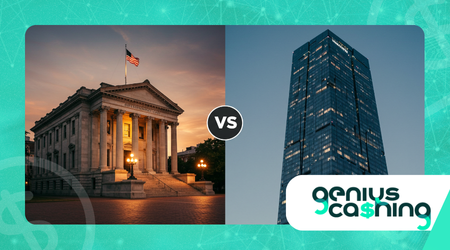
When it comes to business financing, choosing between government loans and private loans isn’t just a numbers game.
It’s a decision that impacts your autonomy, your runway, and how quickly you need to scale.
Government loans often offer stability and favorable terms. Private loans deliver speed and flexibility. Each comes with strings attached. The key is knowing which strings you’re willing to pull.
What Are Government Loans?
Government loans are typically offered through agencies like the SBA (Small Business Administration) or equivalent national programs. These loans are backed by the government, making lenders more willing to issue funds to smaller or newer businesses.
They come with lower interest rates, longer repayment terms, and sometimes even grace periods. However, approval can be slow. Documentation is extensive. And the use of funds may be tightly regulated.
Anúncios
Founders who are in early stages or want to preserve equity often turn to these options. But they must be ready for a bureaucratic process that prioritizes compliance over speed.
What Are Private Loans?
Private loans are issued by banks, online lenders, or alternative financing firms. They often come with fewer restrictions and faster turnaround times. If you need funding next week, private lenders might be your only option.
But there’s a price for speed. Interest rates are typically higher. Terms may be shorter. And lenders will scrutinize your credit score, revenue history, and business plan with a sharper eye.
Private loans favor businesses with strong metrics who are ready to trade higher costs for immediate access to capital.
Read also: Emergency Loans: When and How to Use Them to Cover Deficits
Table: Comparing Government and Private Loans
| Feature | Government Loans | Private Loans |
|---|---|---|
| Interest Rates | Lower, fixed in many cases | Higher, sometimes variable |
| Approval Time | Weeks to months | Days to a week |
| Paperwork | Extensive | Moderate to minimal |
| Flexibility | Low (restricted fund usage) | High (broad usage allowed) |
| Requirements | May include collateral, U.S. presence | Heavily credit- and revenue-dependent |
| Relationship Value | Builds public trust and partnerships | Builds private lending history |
When to Choose a Government Loan
Government loans make sense when you have time on your side. If you’re pre-revenue, developing infrastructure, or scaling sustainably, the lower cost of capital can extend your runway.
These loans are especially valuable when your business model is still maturing or when you need predictable repayment terms over a longer horizon.
Founders looking for patient money to stabilize operations or fund long-term investments should consider these options.
They’re also ideal when you plan to access future grants or public tenders, where prior government involvement adds credibility. Often, these loans come bundled with technical support, mentoring, or access to procurement pathways, offering more than just money.
Beyond affordability, government loans can sometimes offer built-in flexibility, longer grace periods, or mentorship programs attached to the funding.
They may come with stricter eligibility, but once approved, they offer a stable path that prioritizes business viability over short-term returns. For founders focused on sustainability, institutional trust, and long-range goals, government lending is often the smarter strategic choice.
When to Opt for a Private Loan
Private loans shine in moments of urgency. Whether you’re chasing a growth window, covering short-term expenses, or bridging a gap before a major funding round, private capital can move fast. The speed of approval and access to funds can be decisive for businesses facing critical opportunities or time-sensitive setbacks.
It also helps founders who are building outside traditional frameworks. If your business doesn’t fit into government program boxes, or you’re scaling with unconventional metrics, private lenders may understand your story better.
Venture debt, revenue-based financing, or even private angel loans can give breathing room in ways public programs can’t.
Private loans often come with higher costs—but also fewer restrictions. They give you room to experiment, test new models, or act quickly when opportunities appear. Used wisely, they can be the edge that accelerates momentum—if you’ve built the margins to handle the risk. Just make sure the capital fuels real growth, not short-term relief, or you risk replacing one crisis with another.
Conclusion
To build a network that attracts investors, think like someone people want to invest in. That means showing up, giving back, and building over time. There’s no shortcut—but there is a system.
Plant seeds early. Nurture relationships consistently. Focus on who you’re becoming as a founder, not just what you’re building.
When capital is finally needed, you won’t be starting at zero—you’ll be tapping into relationships built on mutual respect, long before the term sheet.
The difference between being one of a hundred in a pitch queue and getting a personal introduction lies in years of quiet credibility-building. Reputation, like capital, compounds.
The earlier you invest in trust, the greater your long-term advantage. Investor networks aren’t built by accident—they’re shaped by intention, and led by those who understand that relationships move faster than money.
Ultimately, investors aren’t just backing a pitch—they’re backing a person. A founder who listens more than they talk. Who shares progress with humility and persistence. Who shows up even when no capital is on the table. Build your network accordingly, and capital will follow.
And when capital does come into play—whether through government loans or private lenders—your ability to choose wisely will define your trajectory.
Government loans offer patience, structure, and long-term alignment. Private capital provides speed, flexibility, and sharp execution under pressure.
Smart founders understand both. They don’t chase funding—they design it. They map not just where the money is, but where it makes the most strategic sense.
And they always remember: real leverage doesn’t come from how fast you grow—it comes from how well you choose the hands that help you build.
FAQ
1. Can I use both government and private loans at the same time?
Yes, but lenders may evaluate your total debt load before approving additional funding. Make sure terms from one don’t conflict with the other.
2. Do government loans require a personal guarantee?
Often, yes. Many SBA-backed loans require a personal guarantee from business owners, especially for smaller businesses.
3. What credit score do I need for a private business loan?
Most private lenders look for a personal credit score of 600+, but stronger scores unlock better terms. Business credit history also plays a role.
4. Are government loans only for U.S. companies?
Most are, though other countries have their own national loan programs. Always check local equivalents.
5. Which option is better for startups?
Startups often benefit from government loans due to low rates and favorable terms. But if speed is crucial, private funding may be the only viable path.
