
Why Diamonds Lost Their Shine as an Investment
Anúncios
Diamonds Lost Their Shine as an Investment due to fundamental shifts in market control, consumer perception, and technological advancements in 2025.
For decades, they were marketed as rare, enduring stores of wealth. However, the reality of the diamond market is far more complex and significantly less liquid than the advertising suggested.
The core problem stems from controlled supply and opaque pricing, features that inherently undermine true investment potential.
The rise of laboratory-grown diamonds has fractured the very notion of rarity. Understanding these dynamics is essential for any modern portfolio manager.
What Was the Myth of Scarcity that Propelled Diamond Values?
The perceived investment value of natural diamonds was built entirely upon a carefully orchestrated myth of scarcity.
Anúncios
For much of the 20th century, a single entity controlled the vast majority of global diamond supply, manipulating prices upwards. This monopoly created an artificial supply constraint.
The diamond was sold not on its utility, but on its emotional and symbolic value a value artificially maintained by tightly limiting the market flow. This control ensured high prices but masked the material’s true abundance.
++ The Risky Business of Investing in Movie Productions
How Did De Beers Control the Market for Decades?
For nearly a century, De Beers maintained a virtual monopoly, buying up rough diamonds from producers worldwide. By stockpiling large quantities, they created the illusion that diamonds were naturally rare.
This strict control over the distribution channel prevented price volatility. This stabilized the resale value, but it was manipulation, not true market dynamics.
Also read: Passive Income Myths: What Investors Should Stop Believing
Why is the Resale Market Inherently Illiquid?
Unlike gold or equities, there is no standardized, centralized exchange for trading loose, polished diamonds. The secondary market is highly fragmented and opaque.
The spread between the retail purchase price and the immediate resale price (the bid-ask spread) is enormous, often exceeding 30-50%. This gap makes a diamond a terrible financial asset.
Read more: How Political Instability Shapes Global Investment Trends
How Did Marketing Campaigns Shape Consumer Perception?
The iconic “A Diamond Is Forever” campaign successfully ingrained the idea of the diamond’s permanence and intrinsic value. This brilliance of marketing linked the stone to love and commitment.
This was a masterful psychological operation designed to discourage resale. If diamonds represented undying love, selling one implied the failure of that commitment, further depressing the resale market.
Why Has Technology Undercut the Core Value Proposition?
The most critical factor in the decline of the diamond as an investment is the emergence of high-quality, scalable laboratory-grown diamonds (LGDs).
Technology has completely shattered the myth of natural rarity and uniqueness. LGDs are chemically and physically identical to mined stones.
In a lab, diamonds can be created faster, cheaper, and with zero ethical concerns. This scientific reality makes the high premium paid for a mined diamond unsustainable over the long term.
How Do Lab-Grown Diamonds Differ from Mined Diamonds?
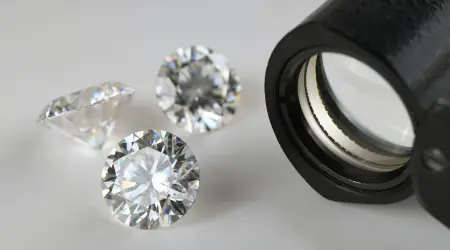
Lab-grown diamonds are not substitutes or imitators; they are genuine diamonds composed of pure carbon atoms crystallized in an identical structure to those mined from the earth. The only difference is their origin.
They exhibit the same brilliance, hardness, and chemical properties. This equivalence makes it increasingly difficult to justify the enormous cost premium for the natural version.
What is the Price Disparity Between LGDs and Mined Diamonds?
The manufacturing process for LGDs is becoming increasingly efficient, driving costs down dramatically. As of 2025, a high-quality lab-grown diamond can cost 60% to 80% less than a similarly sized and graded mined diamond.
This massive price difference forces consumers to question the value proposition of natural stones, especially for jewelry. Why pay five times more for an identical chemical composition?
How Does the Absence of an Inherent Flaw Affect Value?
Mined diamonds are graded based on the 4Cs (Cut, Color, Clarity, Carat), but most contain minute natural flaws or inclusions. LGDs, however, can be produced with near-perfect clarity and color consistency.
The ability to control the quality of the LGD supply eliminates the rarity value derived from the absence of flaws in natural diamonds. This further diminishes the unique scarcity argument.
What Ethical and Social Factors Are Driving Consumers Away?
Beyond pricing, ethical concerns surrounding “blood diamonds” and the environmental impact of mining operations have heavily damaged the industry’s reputation.
Modern consumers prioritize sustainability and ethical sourcing. This shift significantly impacts the luxury market.
Younger generations increasingly see diamonds not as romantic, but as a product associated with environmental damage and labor exploitation. This negative perception erodes the diamond’s status as a desirable asset.
What is the Real Environmental Cost of Diamond Mining?
Large-scale diamond mining is highly resource-intensive, requiring the movement of enormous amounts of earth and the use of vast quantities of water and energy. This results in significant ecological damage and habitat destruction.
This environmental footprint is becoming an unacceptable cost in an age where climate consciousness dictates consumer choices. LGD production, while still energy-intensive, offers a far smaller footprint.
How Does the Kimberley Process Fail to Address All Ethical Issues?
While the Kimberley Process aims to prevent the trade of conflict diamonds, it has been criticized for its narrow focus. It does not address issues like forced labor, child labor, or environmental harm within certified mines.
Consumers are now looking beyond just “conflict-free” status. They demand fully traceable, ethically produced goods, a demand that the opaque natural diamond supply chain struggles to meet.
The Luxury Watch Analogy
The decline of the investment diamond is similar to a premium luxury watch that suddenly loses its mechanical uniqueness because a cheaper, mass-produced digital device (the LGD) achieves the same precision and aesthetic without the manual heritage.
The market realizes the function (brilliance) is separate from the inflated cost (rarity myth).
Which Investment Vehicles Have Replaced Diamonds?
In the current investment climate, high-net-worth individuals are shifting capital away from non-liquid, non-productive assets like diamonds. They are prioritizing assets that offer transparency, predictable yield, and high liquidity.
The investment dollar that once went into a 3-carat diamond is now likely allocated to assets with verifiable, real-time market pricing and clear dividend potential. Real assets are preferred over emotional symbols.
Why Are Colored Gemstones Showing More Resilience?
While the white diamond market struggles, the market for rare, high-quality colored gemstones (e.g., rubies, sapphires, emeralds) remains robust.
Their value is protected by genuine, provable geological rarity and clear provenance.
The lack of scalable laboratory competition for true gem-quality colored stones maintains their intrinsic value and scarcity, unlike the mass-produced colorless diamond.
What Role Do Tangible Financial Assets Play Now?
Investors seeking tangible assets are turning to high-end collectibles, fine art, or specialized physical gold products.
These assets possess clear historical performance data and established international auction markets, offering better liquidity than diamonds.
The shift is toward assets where price discovery is open and competitive, directly contrasting the closed, private market of diamonds. Diamonds Lost Their Shine as an Investment because they lack this transparency.
The Art Market vs. Diamond Market
In the art world, if a painting sells for $5 million, that price is public and instantly sets a benchmark.
In the diamond market, if a dealer buys a stone for $5 million, the transaction remains private, making it impossible for the next buyer to confidently assess its fair market value. This information asymmetry favors dealers, not investors.
According to industry reports from Bain & Company, prices for rough diamonds fell by approximately 15% to 20% between mid-2023 and mid-2024, the sharpest decline since the 2008 financial crisis, largely driven by the growth of LGDs and cautious retailer purchasing.
| Investment Category | Key Value Driver (2025) | Liquidity (Resale Ease) | Price Transparency |
| Natural Diamonds | Emotional/Symbolic Rarity (Artificial) | Low (Large Dealer Spread) | Very Low (Opaque) |
| Lab-Grown Diamonds | Manufacturing Cost/Aesthetic Value | High (Rapidly Falling Price) | Moderate (Standardizing) |
| Gold Bullion | Scarcity/Monetary History (Real) | High (Globally Traded Spot Price) | Very High (Public) |
| Rare Colored Gems | Provable Geological Rarity (Real) | Moderate (Auction House Dependent) | Moderate (Limited Data) |
Conclusion: A Shift from Emotion to Economics
The era where Diamonds Lost Their Shine as an Investment serves as a vital lesson in financial literacy. They were always a marketing triumph, not a true store of value.
The market has finally matured to recognize that scarcity was manufactured and technology has provided a perfect, cheaper twin.
The modern investor demands clarity, liquidity, and genuine value. The opaque pricing, illiquid resale market, and the rise of the LGD have irreversibly demoted the diamond from an asset to a high-cost luxury consumable.
Will the diamond industry successfully rebrand the natural stone for a new generation, or is its investment fate sealed by science and ethics? Share your perspective on the future of the diamond in a sustainable portfolio below!
Frequently Asked Questions
Is it possible to tell the difference between a mined diamond and a lab-grown diamond?
Visually, they are identical. Specialized gemological equipment can detect subtle differences in crystal growth patterns or trace elements, allowing trained gemologists to distinguish them.
Why are diamonds still recommended for engagement rings?
The tradition, heavily reinforced by decades of marketing, persists strongly. For most consumers, the purchase is an emotional expression of love, not a financial investment decision.
If Diamonds Lost Their Shine as an Investment, should I sell my existing diamond jewelry?
Selling a diamond almost always incurs a significant loss against the original retail price. It’s often best to treat existing diamonds as valued jewelry or heirlooms, not as portfolio assets.
What is the biggest hurdle for the LGD industry?
The biggest hurdle is maintaining price stability. Since LGDs are manufactured, increasing production efficiency will continually drive prices down, preventing them from ever becoming a viable long-term investment asset either.
Why is the GIA certificate not enough to guarantee investment value?
While the GIA certificate details the 4Cs (quality), it does not set the price or guarantee resale liquidity. A high-quality stone can still be nearly impossible to sell at a fair price due to the lack of an open trading exchange.
