
What Gold Smuggling Tunnels Tell Us About Economic Desperation

Anúncios
Gold Smuggling Tunnels have become more than just clandestine passages; they represent a visceral map of global economic failure and human survival.
As we witness record-breaking gold prices in late 2025, these subterranean arteries pulse with the desperation of marginalized communities worldwide.
The existence of such perilous infrastructure highlights a massive disconnect between formal financial markets and the reality of the working poor.
Understanding these tunnels requires looking past the crime and examining the systemic pressures that force men underground for survival.
What Are These Tunnels and Why Do They Exist?
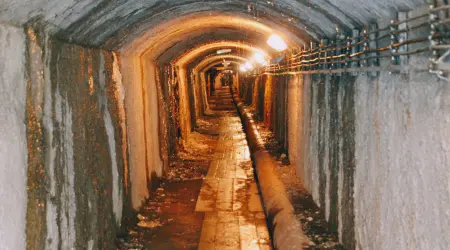
Across borders in Africa, South America, and Southeast Asia, Gold Smuggling Tunnels pierce through unstable earth to bypass state control.
Anúncios
These are often hand-dug, narrow labyrinths designed to move illicitly mined ore away from tax authorities and toward black markets.
They serve as the physical manifestation of “shadow economies” that thrive when local currencies collapse or formal jobs vanish. For many, the risk of a tunnel cave-in is less terrifying than the certainty of starvation in the sun above.
How Does the Global Gold Price Drive Tunnel Construction?
With gold surging past $2,700 per ounce in 2025, the incentive to dig has reached a fever pitch. Every gram salvaged through Gold Smuggling Tunnels represents a life-changing sum for a family living in hyperinflationary environments.
The higher the price on the London Bullion Market, the deeper and more dangerous these tunnels become.
Miners push further into unstable ground, chasing microscopic veins that were previously deemed too expensive or risky to extract.
++The Mystery of the “Ghost” Billionaire No One Ever Saw
Why Do Governments Fail to Stop Underground Smuggling?
Law enforcement often lacks the resources or the local trust needed to monitor thousands of miles of rugged, remote terrain.
In many regions, the gold trade is so deeply embedded in the local power structure that corruption renders official bans toothless.
Furthermore, closing a tunnel without providing an economic alternative often leads to the immediate digging of a new one nearby.
It is a game of “whack-a-mole” where the hammer is heavy but the moles are driven by absolute necessity.
Also read: How Ancient Egypt Taxed Beer — and Why It Worked
What Is the Human Cost of This Underground Labor?
The toll on human life within these structures is staggering and rarely documented by official labor statistics.
Lack of ventilation, mercury poisoning, and structural collapses claim thousands of lives annually in the “artisanal” mining sector.
These miners operate without safety gear or legal protections, often under the thumb of local syndicates. They trade their long-term health for the immediate liquidity that only gold can provide in a fractured economy.
How Does Economic Desperation Fuel the Shadow Gold Trade?
Economic desperation acts as the primary engineer for Gold Smuggling Tunnels, turning ordinary citizens into high-risk miners.
When a national central bank loses its gold reserves or a currency devalues, gold becomes the only trusted medium of exchange.
In countries like Zimbabwe or Venezuela, gold is not a luxury; it is a parallel currency. These tunnels allow people to bypass sanctioned banking systems to trade directly for food, medicine, and fuel.
Read more: The Bizarre History of Life Insurance Policies on Strangers
How Do Tunnels Bypass International Trade Sanctions?
In conflict zones, Gold Smuggling Tunnels act as vital bypass valves for regimes or groups under international sanctions.
Gold is untraceable once melted, making it the perfect tool for laundering money and purchasing prohibited goods on the global market.
By moving ore through secret passages across borders, syndicates can mix “blood gold” with legitimate supplies.
This process effectively “washes” the metal, allowing it to enter the jewelry and investment markets of unsuspecting Western nations.
What Is the Relationship Between Poverty and Illicit Mining?
Research by the International Institute for Environment and Development (IIED) indicates that over 40 million people globally rely on artisanal and small-scale mining.
This sector often thrives precisely where the formal state has failed to provide basic infrastructure or security.
For these millions, the Gold Smuggling Tunnels are not a choice but a default setting for survival. Poverty narrows the horizon of risk, making a 50-meter deep hole in the ground look like a viable career path.
Can You Compare a Tunnel to a High-Frequency Trading Floor?
Consider the “Trading Floor” analogy: A Wall Street trader uses fiber-optic cables to find a split-second advantage in price.
A smuggler uses Gold Smuggling Tunnels to find a geographical advantage against a predatory state or a failing currency.
Both are seeking a “gap” in the system to extract value, but the smuggler pays in blood and sweat instead of digital capital. Is the desperation of the miner any less rational than the greed of the high-volume speculator?
What Data Points to the Scale of Illicit Gold Flows?
Estimates suggest that billions of dollars in gold vanish into the black market every year through unmonitored border crossings.
In some East African nations, the amount of gold “exported” far exceeds the total reported production of all legal mines combined.
This discrepancy highlights the massive volume of metal moving through Gold Smuggling Tunnels. This hidden trade distorts national GDP figures and deprives developing nations of essential tax revenue needed for public services.
What Are the Technical and Social Risks of This Infrastructure?
The construction of Gold Smuggling Tunnels ignores every modern engineering standard, relying on primitive tools and ancestral knowledge.
This technical negligence creates a permanent state of danger for the miners and the surrounding environment.
Beyond the physical risk, these tunnels foster a social environment governed by violence and exploitation. They are the breeding grounds for organized crime and the funding of non-state armed groups.
How Does Mercury Contamination Spread Through Smuggling Routes?
Gold processing often involves the use of liquid mercury to create an amalgam with the gold dust. Because Gold Smuggling Tunnels operate outside of environmental laws, toxic runoff frequently enters local water tables and food chains.
This environmental degradation creates a “toxic debt” that future generations must pay. The immediate financial gain for the smuggler leads to long-term neurological damage for the entire surrounding community.
What Role Does Organized Crime Play in Tunnel Management?
Rarely is a tunnel owned by the men who dig it; instead, powerful syndicates often control the access and the tools.
These groups provide the “protection” and the market access, taking the lion’s share of the profit while the miners take the risk.
This power dynamic creates a cycle of debt bondage where miners are forever working to pay off their equipment or food.
The Gold Smuggling Tunnels thus become a subterranean prison for the world’s most vulnerable laborers.
What is an Original Example of Border-Crossing Tunnels?
In the porous borders of the Amazon rainforest, miners dig horizontal Gold Smuggling Tunnels that start in one country and exit in another.
This allows them to mine in protected indigenous lands and smuggle the ore into a jurisdiction with laxer environmental laws.
These tunnels are often disguised by dense foliage and are only discovered when a sinkhole appears or a satellite detects unexpected deforestation.
They represent a sophisticated, if brutal, solution to avoiding national environmental protections.
How Do Tunnels Impact the Integrity of Global Bullion?
When gold from Gold Smuggling Tunnels enters the supply chain, it compromises the “Responsible Sourcing” certificates that modern investors demand.
Even high-end refineries struggle to distinguish between legally mined gold and metal extracted through child labor or environmental destruction.
This “tainting” of the global supply creates a crisis of confidence for ethical investors. It forces a question we often ignore: how much of the gold in our rings was hauled through a hand-dug hole by a desperate man?
Comparison of Legal Mining vs. Tunnelling Smuggling (2025 Data)
| Feature | Large-Scale Legal Mining | Illicit Gold Smuggling Tunnels | Economic Impact |
| Safety Standards | High (Regulated by ISO/State) | None (Primitive and Unstable) | High fatality rate in shadow sector |
| Environmental Impact | Mitigated (Tailings Dams) | Extreme (Mercury/Cyanide Leakage) | Long-term water table destruction |
| Tax Contribution | 15% – 40% (Royalties/Income) | 0% (Tax Evasion) | Loss of billions in national revenue |
| Labor Dynamics | Formal Contracts/Benefits | Debt Bondage/Exploitation | Sustains cycles of systemic poverty |
| Market Access | LBMA Certified Refineries | Black Market / Laundered Supply | Compromises global ethical standards |
In conclusion, Gold Smuggling Tunnels are a grim architectural response to a world of unequal opportunity.
They prove that as long as the global price of gold outpaces the availability of safe, dignified work, men will continue to risk their lives in the dark.
These tunnels do more than move metal; they reveal the deep fissures in our global financial system, where the glitter of a gold bar is often bought with the safety of the world’s poorest.
We must address the economic desperation above ground if we ever hope to close the dangerous passages below.
What do you think is the most effective way to integrate artisanal miners into the formal economy? Share your thoughts on this complex global issue in the comments below!
Frequently Asked Questions
Why don’t miners just sell their gold to the government?
Many governments offer prices significantly below the global market rate or impose heavy taxes and bureaucratic hurdles.
Smugglers and black market buyers offer immediate cash and higher prices, making Gold Smuggling Tunnels more profitable for the individual miner.
Are all artisanal miners involved in smuggling?
No. Many artisanal miners work in legal cooperatives. However, without access to formal banking or fair-trade certifications, even legal miners are often forced to use illicit channels to move their product to international markets.
How can technology stop these tunnels?
Advanced satellite imagery and ground-penetrating radar are being used in 2025 to detect soil disturbances and secret entrances.
However, the sheer scale of the wilderness in mining regions makes total surveillance nearly impossible without local community cooperation.
Is “clean gold” a real possibility for consumers?
Yes, certifications like “Fairmined” ensure that gold comes from mines that respect labor rights and environmental standards.
However, these programs cover only a tiny fraction of the world’s total supply, with much of the remainder still flowing through unverified routes.
Does the rise of Bitcoin reduce the need for gold smuggling?
While Bitcoin is seen as “digital gold,” it requires internet access and electricity luxuries many in mining regions lack.
Physical gold remains the most reliable and portable store of value in the world’s most desperate economic zones.
