
How Forgotten Banknote Plates Helped Expose Counterfeit Schemes
Anúncios
Forgotten Banknote Plates Helped Expose Counterfeit Schemes and reshaped modern forensic numismatics across central banking institutions globally.
Financial security has always depended on the physical integrity of circulating legal tender, yet sophisticated forgery rings historically exploited gaps in early printing technology.
When long-lost engraving plates resurface in surprising archives or police vaults, document examiners gain the exact physical artifacts needed to dismantle international counterfeiting operations.
Modern forensic investigators frequently rely on recovered historical plates to map out tool marks and micro-imperfections left by illicit presses.
Quick Navigation Through This Investigation
- Why historical engraving plates remain crucial for modern forensic document examiners.
- How central banks track counterfeit currency using recovered printing matrices.
- What recent discoveries reveal about historic forgery syndicates and security upgrades.
What Are Banknote Printing Plates and How Do They Function?
Why Do Historic Engraving Plates Matter Today?
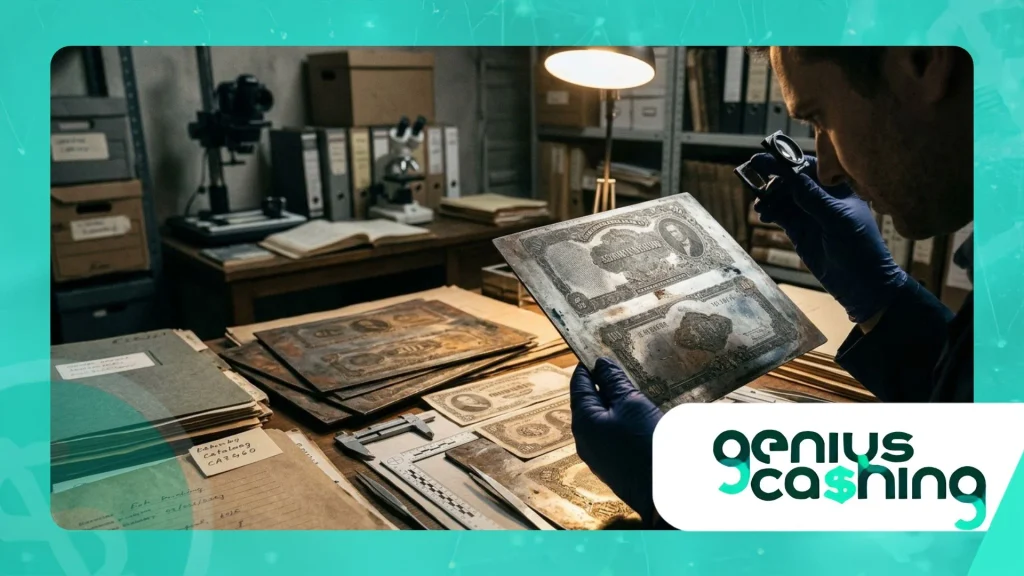
Forgotten Banknote Plates Helped Expose Counterfeit Schemes by providing physical templates that reveal exact engraving anomalies unique to specific counterfeit rings.
Anúncios
Forensic scientists analyze these recovered metal sheets to match microscopic tool marks found on seized fraudulent bills circulating in modern markets.
Every master hand-carved plate leaves microscopic ridges and ink distribution patterns that act as an unalterable fingerprint for investigators.
Central bank archives preserve these historical artifacts to train new security analysts in recognizing sophisticated chemical and mechanical counterfeit methods.
++ Curiosities About Billionaires Who Refused Luxury Lifestyles
How Did Early Forgers Duplicate Official Currency?
Counterfeiters throughout the nineteenth and twentieth centuries relied heavily on illicitly copied plates or transferred impressions taken directly from genuine banknotes.
Criminal syndicates often bribed rogue printing press operators or stole discarded master plates from municipal mint vaults during periods of political instability.
Once criminals secured a physical matrix, they could replicate intaglio printing textures that routinely fooled ordinary citizens and commercial cashiers alike.
Law enforcement agencies discovered that comparing these illicit plates to recovered currency exposed specific chemical ink compositions used by organized crime networks.
Why Did Forgotten Printing Matrices Expose Modern Counterfeiters?
How Do Microscopic Tool Marks Reveal Forgeries?
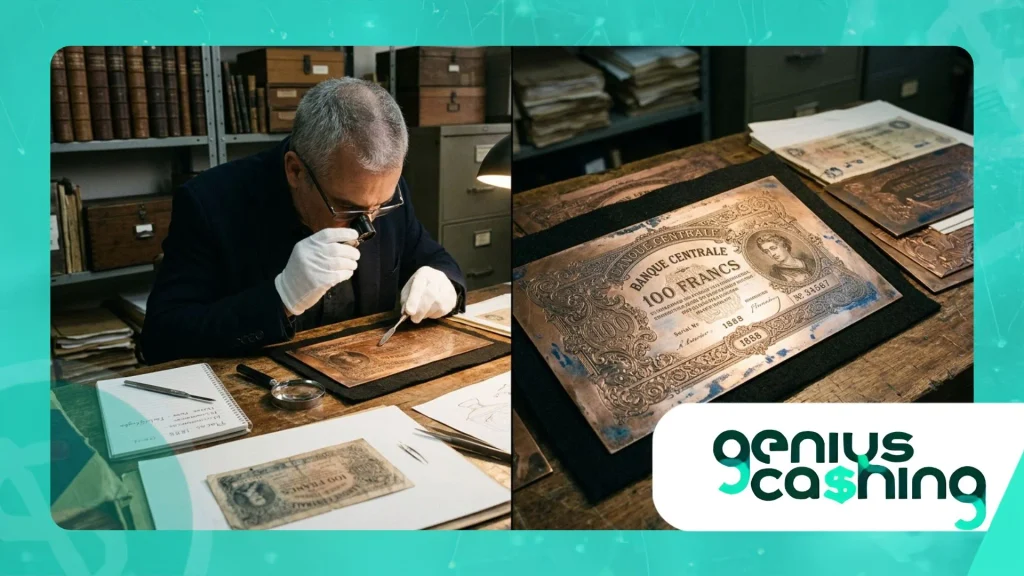
Forgotten Banknote Plates Helped Expose Counterfeit Schemes because no two hand-engraved metal plates share identical micro-scratches or stylus pressure depths.
When forensic experts examine seized counterfeit currency under high-resolution electron microscopes, they look for specific structural flaws originating from the manufacturing plate.
If a forged banknote displays ink bleeding identical to an anomaly found on a recovered historical plate, investigators trace the source instantly.
This meticulous scientific methodology eliminates guesswork and provides airtight physical evidence during high-profile federal financial crime prosecutions.
Also read: The Most Expensive Business Handshake Ever Recorded
What Role Do Central Bank Archives Play in Security?
National monetary authorities maintain secure underground repositories containing thousands of obsolete, canceled, and recovered printing plates from past circulation eras.
Archivists catalog each metal sheet using high-precision optical scanners to build comprehensive digital databases accessible to international law enforcement coalitions.
When new counterfeit surges emerge across international borders, security analysts cross-reference the fraudulent lines against these historical archival databases.
This proactive institutional strategy ensures that historical artifacts actively protect contemporary monetary systems from evolving financial fraud techniques.
How Are Law Enforcement Agencies Utilizing Recovered Plates Today?
What Advanced Technologies Help Analyze Recovered Artifacts?
Forgotten Banknote Plates Helped Expose Counterfeit Schemes through the integration of non-destructive laser surface scanning and advanced spectral elemental analysis.
Forensic laboratories use X-ray fluorescence spectrometers to determine the exact metallurgical composition of recovered plates and suspect banknotes.
By comparing the alloy ratios of copper, nickel, and zinc, specialists confirm whether modern counterfeiters used authentic historical materials.
These technological leaps allow investigators to dismantle transnational forgery rings before fraudulent currency floods global commercial markets.
Read more: How a Parking Lot Became a Billion-Dollar Investment
How Does Global Intelligence Sharing Stop Counterfeit Rings?
International police cooperation enables rapid sharing of digital scans recovered from historic printing plates discovered during police raids across multiple continents.
Interpol maintains a dedicated currency and security documents database where member nations upload forensic profiles of intercepted counterfeit bank notes daily.
When an old plate surfaces in a private collection or estate sale, experts immediately analyze its threat potential to global monetary stability.
Collaborative intelligence networks transform passive historical artifacts into active tactical weapons against organized financial crime syndicates.
| Case Study / Discovery | Year Recovered | Forensic Impact | Associated Central Bank / Archive |
| London Mint Archive Recovery | 2021 | Exposed nineteenth-century intaglio duplication methods. | Bank of England Museum |
| Federal Reserve Vault Audit | 2023 | Identified dormant master plates from unauthorized press runs. | U.S. Federal Reserve Archives |
| European Heritage Seizure | 2025 | Linked historical forgery syndicates to modern digital replicas. | European Central Bank Collection |
Final Reflections on Monetary Security and Historical Preservation
Protecting global financial systems requires a delicate balance between embracing modern digital security features and understanding historical counterfeiting vulnerabilities.
The discovery of lost printing plates continually reminds monetary authorities that past criminal tactics often evolve into sophisticated contemporary threats.
By preserving these artifacts and applying advanced forensic techniques, central banks safeguard the integrity of everyday commercial transactions.
We invite you to share your thoughts on financial history in the comments below.
Frequently Asked Questions
What makes recovered banknote plates valuable to modern forensic scientists?
Recovered banknote plates provide physical evidence featuring unique micro-scratches and engraving anomalies that match fraudulent bills.
Forensic examiners use these metal matrices to trace illicit press operations and secure convictions in financial crime cases.
How do central banks prevent modern currency forgery?
Central banks integrate advanced security elements such as color-shifting inks, holographic security threads, and complex micro-text patterns.
These modern technological barriers make unauthorized duplication extremely difficult for contemporary criminal syndicates.
Where are historical printing plates typically discovered?
Historical plates are frequently found during estate liquidations, private museum audits, unrecorded bank vault cleanouts, and international police raids on illicit collections.
Law enforcement agencies carefully secure these items to prevent illegal exploitation.
Can old printing plates still produce valid currency today?
Obsolete printing plates cannot produce valid currency because modern banknotes feature entirely different dimensions, watermarks, and substrate materials.
Furthermore, central banks constantly update currency designs to render older engraving styles completely obsolete.
How does international law enforcement track counterfeit currency rings?
International agencies like Interpol utilize centralized secure databases to share forensic data, ink compositions, and optical scans of intercepted counterfeit bills.
This cooperative framework allows investigators to track transnational forgery networks across multiple global jurisdictions.
