
Risk Tolerance and Its Impact on Your Investment Strategy
Anúncios
Understanding your risk tolerance is key to a good investment strategy. It’s like building a strong foundation for your financial future. Knowing your risk tolerance helps match your investments with your goals and comfort level. This way, every investment choice is smart and makes you feel secure.
Good risk assessment is linked to smart asset allocation. This means spreading your investments across different types like stocks, bonds, and cash. Your risk tolerance shows how much market ups and downs you can handle. If you’re bold, you might choose more stocks for their chance at big returns.
But if you’re cautious, bonds and stable assets are safer choices. Your risk tolerance guides your investment strategy towards success and safety.
What is Risk Tolerance?
Risk tolerance is how well someone can handle losses in their investments. Knowing your risk capacity is essential for a portfolio that meets both your short-term worries and long-term dreams.
Many things shape your risk tolerance, like age, income, and financial goals. These factors help decide how much risk you can take on for potential gains. For example, younger people might take on more risk than those close to retirement, due to their longer time horizon and income stability.
Anúncios
Doing a thorough risk assessment is key to finding the right investments for you. Financial advisors use tools and questionnaires to understand your risk tolerance. These tools look at your financial life, helping to see if you’re ready for certain investments.
| Profile Element | Details to Consider | Impact on Risk Tolerance |
|---|---|---|
| Age | Younger investors might have more time to recover from losses. | Generally higher risk capacity |
| Income | Higher stable incomes might allow for riskier investments. | Can increase willingness to accept financial risk |
| Financial Goals | Short-term vs. long-term goals can dictate investment approaches. | Affects the balance of risk and security in investment choices |
| Market Experience | Prior experience in handling market fluctuations. | Experienced investors might possess a higher risk tolerance |
The Role of Risk Tolerance in Financial Planning
Knowing how risk tolerance shapes financial plans is key for investors. It shows what investments are right and how much diversification is needed. This balance is very important for managing risk and aiming for returns.
Risk tolerance greatly influences how investments are spread out. This spread, or asset allocation, matches the investor’s risk capacity and time frame.
Setting financial goals needs a clear understanding of risk tolerance. Diversifying a portfolio is also vital to reduce risks and meet different financial targets. By mixing investment types, risks are spread, leading to more stable returns over time.
This alignment helps avoid investments that are too risky or too safe. It’s about finding a balance that fits personal comfort and financial dreams.
Evaluating Risk Tolerance Over Time
Things like age, income, family, and how close you are to retirement can affect your investment choices. By regularly checking your risk tolerance, you can make sure your investments match your current life. This can give you peace of mind and possibly better returns.
Those with low risk tolerance might choose stable, lower-return investments. Bonds or fixed deposits could offer security and steady, though modest, returns.
On the other hand, high-risk investors might look into stocks, mutual funds, or venture capital. These options have the chance for higher returns but come with the risk of more ups and downs.
Real Estate and Venture Capitals: These are high-risk but could offer big rewards, fitting for those with a bold risk profile.
Bonds and Savings Accounts: Great for those wanting stability.
Stocks and Mutual Funds: Good for investors willing to handle bigger swings for the chance of higher returns.
Investment Diversification and Risk Management
Creating a diversified portfolio is key to financial security and managing risks. It’s not just about having different investments. It’s about balancing them well to reduce losses and increase gains.
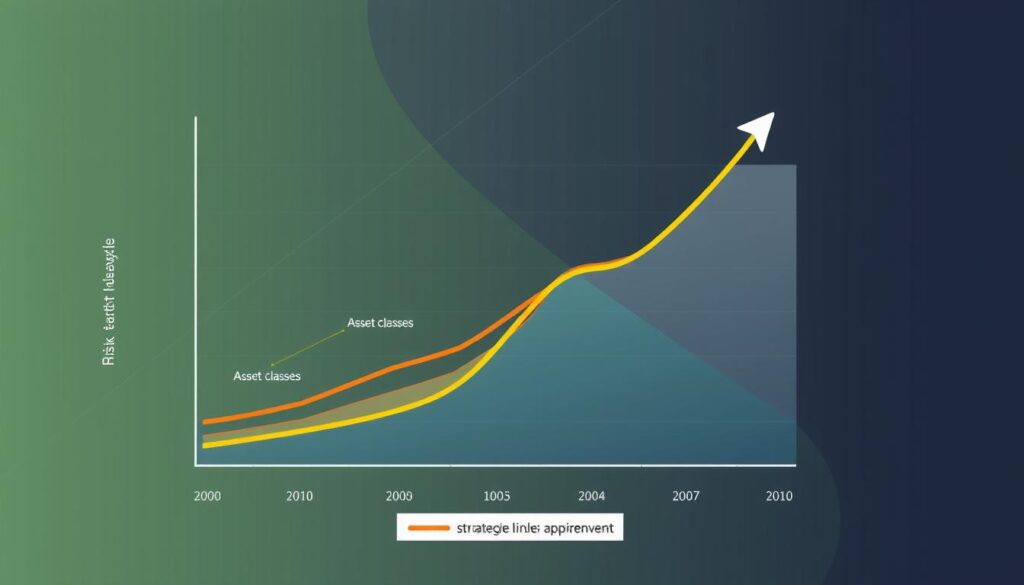
To lower risk, mix asset classes like stocks, bonds, real estate, and commodities. This way, one sector’s bad performance won’t ruin your whole portfolio. It helps protect against market ups and downs.
- Stocks: They offer high returns but are riskier, best for long-term goals.
- Bonds: Less volatile than stocks, they provide steady income and act as a safety net during downturns.
- Real Estate: It can grow in value and earn rental income, fighting inflation.
- Commodities: They add more risk diversity since their prices don’t always move with other assets.
Spreading investments widely helps keep your financial security in different market conditions. Tailor your asset mix to your risk level, goals, and time frame. Adjust it as your life and market change.
| Asset Class | Typical Risk Level | Possible Returns |
|---|---|---|
| Stocks | Higher | Potential High |
| Bonds | Lower | Steady Income |
| Real Estate | Moderate | Appreciation + Rental |
| Commodities | Moderate to High | Variable |
For a strong financial future, add smart diversification to your portfolio. It’s not just about having many assets. It’s about how well they work together to meet your financial dreams.
Conclusion
In our journey through smart investing, we’ve seen how risk tolerance shapes a strategy for financial success. There are many investment accounts, like IRAs and 401(k) plans, to help investors reach their goals. Risk is not just a one-time check but a continuous process that changes with life and market shifts.
As we conclude, remember the importance of diversification and staying patient and informed during market ups and downs. Using different investment accounts wisely is key to success. Smart investing is a careful and adaptable process that needs clarity, commitment, and flexibility.
With the knowledge we’ve shared, we urge you to move forward with confidence, building a strong and rewarding financial future.
FAQ
What exactly is risk tolerance in an investment context?
Risk tolerance is how much risk you’re okay with in your investments. It’s about what level of ups and downs you can handle. It’s key to finding the right investment strategy for you.
How can I determine my own risk tolerance?
To find your risk tolerance, you might take a risk assessment. This could include answering questionnaires or thinking about your past investments. Your age, income, goals, and how long you have to invest also matter. Talking to a financial advisor can give you more insight.
Why is it important to align investment choices with my risk tolerance?
Matching your investments with your risk tolerance is very important. It helps you stick to your plan, even when markets change. This way, you avoid making quick decisions that might harm your long-term goals.
Can you briefly explain the difference between a Traditional IRA and a Roth IRA?
Sure! A Traditional IRA lets you grow your money without taxes now, but you’ll pay taxes later. A Roth IRA, however, means you pay taxes now but get tax-free money later. This is because you contribute with after-tax dollars.
What are the benefits of a 401(k) plan in my investment strategy?
A 401(k) plan often has perks like employer matching and tax benefits. It lets you save for retirement before or after taxes, depending on the plan. It’s a big part of a solid investment and retirement plan.
How should I adjust my investment strategy as my risk tolerance changes over time?
As your life and the market change, so might your risk tolerance. You might need to tweak your investment mix or financial goals. This keeps your strategy in line with your current risk level.
What role does diversification play in managing investment risk?
Diversification is key to managing risk. By investing in different types of assets, like stocks and bonds, you can lessen the impact of market swings. This helps ensure stable returns and financial security over time.
How does market volatility affect my risk tolerance?
Volatility can test your risk tolerance by introducing uncertainty and the chance of losses. It’s important to remember that market ups and downs are normal. Keep a long-term view and adjust your strategy as needed, without making rash decisions.
What technological tools are available to help assess and adjust my risk tolerance?
Investors now have many tech tools to check and adjust their risk tolerance. These include robo-advisors, apps, and online calculators. They offer personalized advice, simulate scenarios, and help keep your portfolio balanced.
Which factors should I consider when choosing the best investment accounts?
When picking investment accounts, think about taxes, investment choices, fees, and if they fit your goals. Comparing IRAs and 401(k)s can help you make smart choices based on your financial situation.
