The Credit Illusion: When Easy Financing Masks a Growing Financial Deficit
Anúncios
The Credit Illusion is currently orchestrating a dangerous symphony across the global economy, convincing millions that their purchasing power is expanding while their net worth actually evaporates.
As we navigate the complexities of 2026, the proliferation of “Buy Now, Pay Later” (BNPL) schemes and ultra-flexible micro-financing has blurred the line between genuine wealth and temporary liquidity.
I have observed that this psychological trap creates a false sense of security, allowing individuals to maintain lifestyles that their actual income cannot sustain.
This systemic reliance on future earnings to pay for present desires is not just a personal habit; it is a structural shift that masks a widening financial deficit at both the household and national levels.
Strategic Overview: Financial Health vs. Borrowed Time
- The Consumption Trap: How “frictionless” checkout buttons decouple the pain of paying from the joy of acquiring.
- The Debt Snowball: Analyzing the transition from manageable installments to a permanent cycle of high-interest refinancing.
- Market Vulnerability: The risk of sudden credit tightening and its impact on those living on the edge of the deficit.
- Wealth Preservation: Methods to distinguish between productive leverage and destructive consumer debt in a high-inflation environment.
Why does easy financing hide a real financial deficit?
The Credit Illusion works by breaking down large, intimidating price tags into small, digestible monthly bites that feel inconsequential to the average consumer.
Anúncios
When you view a $1,200 smartphone as merely “$50 a month,” your brain stops evaluating the total cost and starts focusing on immediate cash flow.
This cognitive bias allows people to accumulate dozens of “small” obligations that, when aggregated, consume a terrifying percentage of their monthly take-home pay.
I believe we are witnessing a “death by a thousand cuts” where consumers lose track of their total liability until they face a sudden emergency.
Maintaining this lifestyle is like running on a treadmill that slowly increases in speed; eventually, your legs cannot keep up with the revolving belt.
Without a significant surplus, any minor disruption in income causes the entire structure of borrowed stability to collapse into a deep, inescapable deficit.
How do BNPL services manipulate consumer psychology?
Fintech platforms intentionally design their interfaces to minimize “payment friction,” removing the moment of hesitation that usually accompanies a major financial decision.
By delaying the first payment, The Credit Illusion convinces the shopper that the item is practically free in the immediate present, leading to impulsive overspending.
These services often bypass traditional credit reporting, meaning a consumer can be deeply overleveraged across multiple platforms without any single lender seeing the full picture.
This lack of transparency hides the true scale of the financial deficit from both the borrower and the financial regulators.
++ Lifestyle Inflation in the Remote Work Era
What are the dangers of high-interest revolving credit?
Revolving credit traps the user in a cycle where they only ever pay the interest, never touching the principal balance of their mounting debt.
This creates a permanent drain on their future wealth, effectively selling their labor years in advance to pay for products that have already depreciated.
I find that many people use new credit to pay off old credit, which is the ultimate sign of a terminal financial deficit.
This behavior doesn’t solve the problem; it simply pushes the day of reckoning further down the road while increasing the total cost of survival.
Why are modern interest rates a trap for the unwary?
Central banks in 2026 have maintained higher rates to combat persistent inflation, yet many credit products still advertise “low starting rates” to entice new borrowers.
The Credit Illusion fades quickly when the variable interest rate kicks in, suddenly doubling the monthly payment and shattering the consumer’s carefully balanced budget.
According to a 2025 report by the Federal Reserve Bank of New York, total household debt reached a record $18 trillion, with a notable spike in credit card delinquencies.
This statistic highlights that the “easy money” era has left a hangover of debt that many families simply cannot service.
The gap between what people earn and what they spend is being filled by high-cost borrowing, which is a recipe for a systemic economic correction.
We must ask ourselves: how much of our current “economic growth” is actually just a temporary surge fueled by unsustainable levels of private leverage?
Also read: Digital Inflation: How Online Services Are Raising Prices Without You Noticing
How does inflation exacerbate the debt cycle?
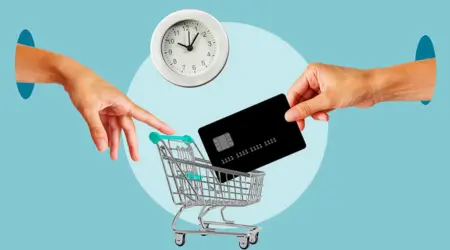
When the cost of living rises faster than wages, people often turn to credit to maintain their standard of living, hoping inflation is transitory.
Unfortunately, using debt to fund daily essentials like groceries and fuel turns a temporary price spike into a long-term financial deficit with compounding interest.
Pense in a family using a credit card to cover a 10% increase in food costs; by the end of the year, they haven’t just paid for food.
They have paid for food plus 24% interest, effectively making their cost of living 34% higher than it was the previous year.
Read more: Subscription Fatigue: How Monthly Payments Are Quietly Creating Financial Deficits
Is the “Subscription Economy” a form of hidden debt?
Many modern services have moved to monthly recurring models, which act as “micro-debts” that are easy to forget but difficult to cancel.
These small, automated outflows erode your monthly surplus, making it harder to save for genuine emergencies and forcing more reliance on The Credit Illusion when a real crisis hits.
An analysis of 2026 spending patterns shows that the average urban professional pays for over 12 different subscriptions, totaling hundreds of dollars monthly.
This “lifestyle creep” is often the primary driver of a growing financial deficit, yet it remains largely invisible because each individual charge is so small.
How can you break the cycle of borrowed prosperity?
The first step in shattering The Credit Illusion is a brutal, honest audit of every single recurring payment and outstanding balance you currently hold.
You must stop looking at your bank balance and start looking at your net worth, subtracting every dollar you owe from every dollar you own.
My recommendation for you is to adopt a “cash-first” mentality, where any purchase that cannot be paid in full immediately is simply not an option.
Breaking the addiction to easy financing requires a painful period of “lifestyle deflation,” but it is the only way to avoid a catastrophic financial deficit later.
Comparison of Financing Methods and Long-Term Costs
| Payment Method | Initial Feeling | Interest Rate (Avg) | Impact on Wealth |
| Cash / Debit | Painful (Immediate) | 0% | Preserves future income |
| BNPL (4 installments) | Easy / Frictionless | 0% (if on time) | Commits future cash flow |
| Credit Card | Empowering | 18% – 29% | Erodes future net worth |
| Payday / Micro-loan | Desperate | 300% – 400% | Guaranteed financial deficit |
In my analysis, the current economic landscape is a house of cards built on the shaky foundation of The Credit Illusion.
We have prioritized the appearance of success over the reality of stability, leading to a world where we own very little and owe a great deal.
If we continue to treat credit as a substitute for income, the eventual market correction will be far more painful than the temporary discomfort of living within our means.
Real financial freedom is not the ability to buy whatever you want today on a plan; it is the peace of mind that comes from owing no one anything tomorrow.
By confronting the deficit now, we can rebuild a life based on genuine assets rather than the hollow promises of easy financing and perpetual debt.
Share your experience in the comments and tell us: have you ever found yourself stuck with one of those “small” installments that ended up becoming a huge burden?
Frequently Asked Questions
Is BNPL always a bad idea?
Not necessarily, but it is a tool that requires extreme discipline. If you use it to buy things you couldn’t otherwise afford, you are falling into a deficit trap.
How do I know if I’m overleveraged?
A common rule of thumb is the debt-to-income ratio; if more than 35% of your gross monthly income goes toward debt payments, you are in the danger zone.
Why is The Credit Illusion so hard to spot?
Because society often celebrates consumption. We see the new car or the designer bag, but we never see the high-interest monthly statement that funded it.
Can I fix a financial deficit without a new job?
Yes, by aggressively cutting non-essential subscriptions and “lifestyle” expenses to create a surplus that can be used to pay down high-interest debt.
Does carrying a balance help my credit score?
This is a common myth. Paying your balance in full every month is the best way to maintain a high score without losing money to interest payments.