
The Oldest Bank Still Operating Today
Anúncios
oldest bank still operating today status belongs to Banca Monte dei Paschi di Siena, a legendary institution founded in 1472 in Tuscany, Italy.
Originally established as a mount of piety to provide low-interest financial relief to vulnerable citizens, this remarkable entity navigated centuries of economic upheavals, systemic banking transformations, and complex modern restructurings to remain active in the modern world.
How has a single institution managed to handle financial obligations continuously across six different centuries?
The endurance of historical monetary institutions reveals crucial insights regarding risk management, structural adaptability, and enduring public trust.
To help you navigate this deep historical dive, here is a quick roadmap covering the core pillars of our discussion:
Anúncios
- What Is the History Behind the oldest bank still operating today?
- How Has Monte dei Paschi di Siena Adapted to Modern Markets?
- Why Do Ancient Financial Institutions Outlast Global Crises?
- Key Milestones of Historical Financial Institutions
- What Does the Legacy of Ancient Banking Teach Us Today?
- Frequently Asked Questions About Historic Banking
Understanding the roots of modern finance requires examining the historical context that gave birth to formal institutional lending.
During the early Italian Renaissance, merchants in Siena required reliable credit mechanisms to support commerce without subjecting citizens to predatory usury practices common across regional trade networks.
Monte dei Paschi di Siena pioneered structured collateralized lending that stabilized local municipal trade while laying foundational blueprints for public banking across Europe.
By surviving world wars, currency overhauls, and financial panics, the institution proved that institutional longevity depends entirely on strict systemic balance and regulatory adaptability.
What Is the History Behind the oldest bank still operating today?
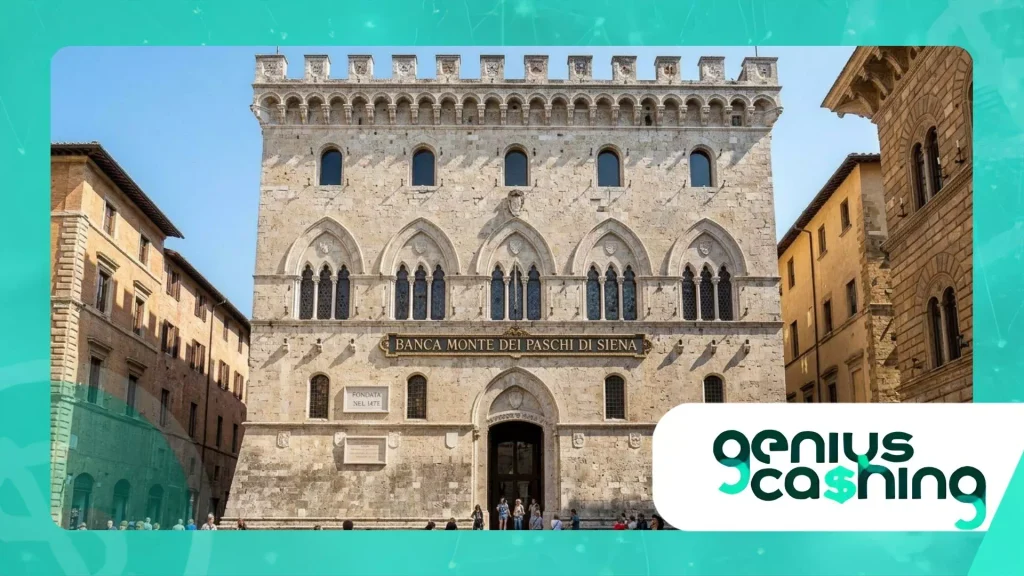
How Did a 15th-Century Institution Begin Its Journey?
Banca Monte dei Paschi di Siena opened its doors in 1472 within the Republic of Siena to offer charitable loans to impoverished residents.
Founded under municipal oversight, the institution operated as a “Monte di Pietà,” utilizing pooled civic capital to back micro-loans secured against basic personal items.
This community-focused foundation established a unique relationship between civic trust and institutional finance that sustained the organization through political shifts.
As trade routes expanded across northern Italy, the bank transitioned into a formal public lending entity capable of issuing larger commercial credits.
Its governance model prioritized steady capital preservation over high-risk speculation, allowing it to withstand regional conflicts and economic downturns.
This foundational balance between public duty and prudent risk management allowed the institution to solidify its standing as the oldest bank still operating today while continuing to serve European account holders continuously.
++ Why Ancient Merchants Were Richer Than Some Modern Nations
Why Has Siena’s Legacy Remained Unbroken for Centuries?
The survival of Siena’s premier lending house relied heavily on structural guarantees created during the late 16th century when Tuscany underwent unification.
In 1624, the bank linked its capital backing directly to income generated by state-owned pasture lands, known as the “Paschi,” providing depositors with unprecedented sovereign security.
This agricultural asset backing buffered the balance sheet against market volatility and set a global standard for reserve backed banking structures.
Throughout the 18th and 19th centuries, the institution maintained strict compliance with emerging European financial regulations while modernizing its accounting methodologies.
By anchoring its operations in tangible land yields and municipal governance, the bank avoided speculative bubbles that collapsed competing merchant institutions across Europe.
That persistent risk discipline enabled the firm to maintain continuous operations across centuries of geopolitical change.
How Has Monte dei Paschi di Siena Adapted to Modern Markets?
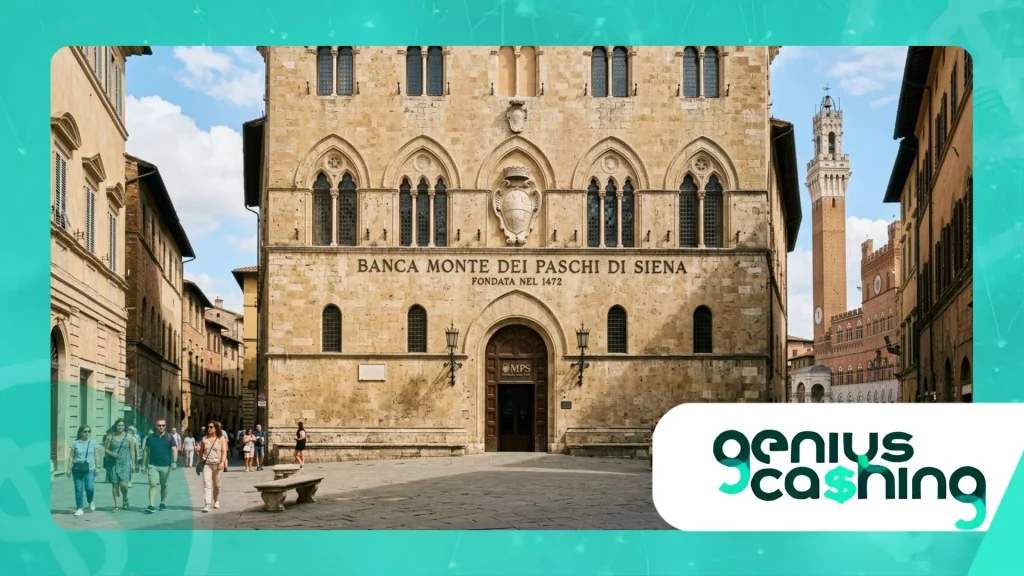
What Modern Financial Reforms Saved the Banking Titan?
Navigating the transition into 21st-century European banking presented unprecedented challenges, including significant exposure to sovereign debt derivative contracts following the 2008 global crisis.
To prevent structural failure, the Italian government orchestrated comprehensive bailouts and recapitalization efforts between 2017 and 2023 under strict European Central Bank guidelines.
These regulatory interventions forced aggressive restructuring, non-performing loan offloading, and executive governance overhauls to stabilize operations.
The transformation replaced legacy assets with digitized retail banking infrastructure, streamlined operational footprints, and restored profitability metrics across core commercial units.
Modern stress tests conducted by European regulators now confirm healthier capital adequacy ratios, demonstrating how historic institutions can successfully modernize under strict regulatory oversight.
This systematic recovery reinforces how the oldest bank still operating today maintains its active status through persistent regulatory compliance and corporate restructuring.
Also read: Why Do So Many Billionaires Wear the Same Clothes Every Day?
How Does the Institution Balance History with Digital Banking?
Integrating modern digital platforms alongside historic branch networks requires a delicate operational balance between traditional client relationships and technological automation.
Today, customers access modern mobile applications, cloud-secured clearing networks, and algorithmic credit processing while visiting branches housed in historic Renaissance palaces.
This dual approach preserves local client loyalty while delivering the speed and security required by modern international regulations.
Furthermore, fintech integration allows the group to process high-volume domestic payments, commercial loans, and wealth management portfolios with competitive efficiency.
By embracing open banking protocols and automated risk compliance tools, the firm matches the agility of modern digital competitors.
Historical credibility combined with digital innovation ensures the bank remains relevant to retail consumers and corporate enterprises alike.
Why Do Ancient Financial Institutions Outlast Global Crises?
How Important Is Risk Management Over Centuries?
Long-term institutional survival requires an absolute refusal to prioritize short-term speculative yields over core capital preservation.
Institutions that outlast centuries of market shifts implement strict underwriting standards, maintain diverse asset bases, and retain high liquidity reserves.
Like a sturdy lighthouse enduring century-long ocean storms without shifting its foundation, an enduring bank treats systemic risk management as an immutable discipline rather than a flexible option.
Moreover, the historic ability to absorb severe macroeconomic shocks stems from deep integration with public regulatory frameworks and sovereign backing.
When financial panics sweep through markets, institutions with deep cultural heritage, verifiable reserves, and strong municipal ties frequently receive preferential liquidity support.
Institutional endurance relies on combining conservative fiscal management with active adaptability whenever fundamental market structures evolve.
Read more: Why Do So Many Billionaires Wear the Same Clothes Every Day?
What Role Does Public Trust Play in Institutional Survival?
Public trust forms the underlying capital of any enduring financial firm, functioning as an invisible reserve during economic contractions.
Throughout centuries of monetary transitions from silver coinage to fiat currency and modern electronic ledgers depositors consistently seek out established institutions during periods of broader market uncertainty.
This psychological anchoring provides historical banks with stable deposit bases that newer, unproven competitors often lack during panics.
This enduring credibility is reinforced through transparent auditing, regulatory alignment, and long-standing community relationships.
By maintaining transparent operations and honoring customer obligations through multiple economic cycles, historic firms build brand equity that mitigates run-on-bank risks.
Ultimately, institutional longevity reflects an ongoing contract between public trust and conservative risk stewardship.
Comparative Data on Historic Operating Financial Institutions
| Institution Name | Founding Year | Country of Origin | Original Purpose | Current Primary Focus |
| Banca Monte dei Paschi di Siena | 1472 | Italy | Pledging charity & municipal micro-loans | Retail & Commercial Banking |
| Berenberg Bank | 1590 | Germany | Merchant trading & import commission | Investment & Private Wealth Management |
| C. Hoare & Co. | 1672 | United Kingdom | Private merchant lending | Private Banking & Wealth Management |
| Bank of England | 1694 | United Kingdom | Government debt issuance & war funding | Central Banking & Monetary Policy |
The Lasting Influence of Historical Institutions
Examining the operational history of ancient banking houses demonstrates that long-term fiscal stability requires continuous adaptability, strict regulatory compliance, and conservative capital preservation.
Banca Monte dei Paschi di Siena exemplifies how civic foundations can evolve into modern financial powerhouses capable of navigating global crises.
The survival of these legacy entities serves as a practical reminder for modern fintech developers and traditional bankers that public confidence remains the true cornerstone of sustainable finance.
As international markets continue to embrace digital transformation, decentralized ledgers, and real-time payment rails, the underlying principles practiced by historical banks remain entirely relevant.
Institutions that prioritize transparent risk management, strong capital reserves, and authentic customer trust will continue to navigate future market shifts successfully.
Consider how these centuries-old financial principles apply to your own long-term wealth strategies and share your thoughts in the comments section below!
Frequently Asked Questions
Which institution holds the title of the world’s oldest operating bank?
Banca Monte dei Paschi di Siena holds the official record, having been founded continuously in 1472 in Siena, Italy.
It operated initially as a civic charity before expanding into full commercial banking services across Europe. Its continuous operational history makes it the recognized leader in banking longevity.
Is the world’s oldest operating bank financially stable today?
Following extensive recapitalization, structural restructuring, and non-performing loan offloading supervised by the European Central Bank, the institution has restored its financial stability.
Recent regulatory stress tests confirm healthy liquidity ratios and solid capital reserves. The bank operates profitability within standard European commercial guidelines.
What is the second oldest operating bank in the world?
Berenberg Bank, established in Hamburg, Germany in 1590 by the Berenberg family, is recognized as the world’s second-oldest bank.
It operates today as a successful private banking and investment firm. It maintains an unbroken family lineage in merchant finance.
How did these ancient banks survive historical wars and economic collapses?
Historic banks survived major global crises by maintaining conservative asset backings, diversifying their balance sheets, and adhering strictly to regulatory reforms.
Many also benefited from municipal or sovereign asset backing during economic shifts. Their strong public reputation helped retain deposit stability during panics.
Can individuals still open accounts at the world’s oldest bank today?
Yes, Banca Monte dei Paschi di Siena functions as a modern retail, commercial, and private bank serving millions of personal and corporate clients across Italy and Europe.
Customers can open traditional accounts, access credit products, and use digital banking applications.
It operates like any modern European financial institution, retaining its historical title as the oldest bank still operating today.
