
Understanding the Risks of Inadequate Working Capital Management
Anúncios
Working capital is vital for any business. It’s what keeps operations running every day. But, what if a company can’t manage its working capital well? The risks are huge and can hurt a business’s financial health and sustainability.
Let’s look into working capital management and why it’s key for all businesses. We’ll cover cash flow and inventory control. These are crucial for a business’s financial stability.
Poor inventory management can cause problems. It can lead to not enough stock or too much. Many mid-sized businesses face challenges with real-time data. They often choose cheaper systems over advanced technology. This can harm their financial health.
We’ll see how bad working capital management can slow growth and hurt efficiency. It can also damage a company’s reputation. Stay with us to learn how to keep cash flow healthy and ensure business success.
Fundamentals of Working Capital Management
Working capital management is crucial for a company’s financial health. It balances current assets and liabilities for smooth operations. The aim is to boost liquidity and efficiency.
Anúncios
The working capital ratio is a key metric. It compares current assets to liabilities. A ratio between 1.2 and 2.0 shows a company can meet short-term obligations.

- Cash management
- Accounts receivable management
- Inventory control
- Accounts payable management
These elements help keep cash flow for daily needs and debt. Focusing on them can make a company more stable and profitable.
| Ratio | Purpose | Ideal Range |
|---|---|---|
| Working Capital Ratio | Measures liquidity | 1.2 – 2.0 |
| Collection Ratio (DSO) | Evaluates accounts receivable efficiency | Lower is better |
| Inventory Turnover Ratio | Assesses inventory management | Higher is better |
Good working capital management brings many benefits. It improves liquidity, allows for growth, and boosts profits. It’s a key part of financial management that affects a company’s success and survival.
Types of Working Capital and Their Strategic Impact
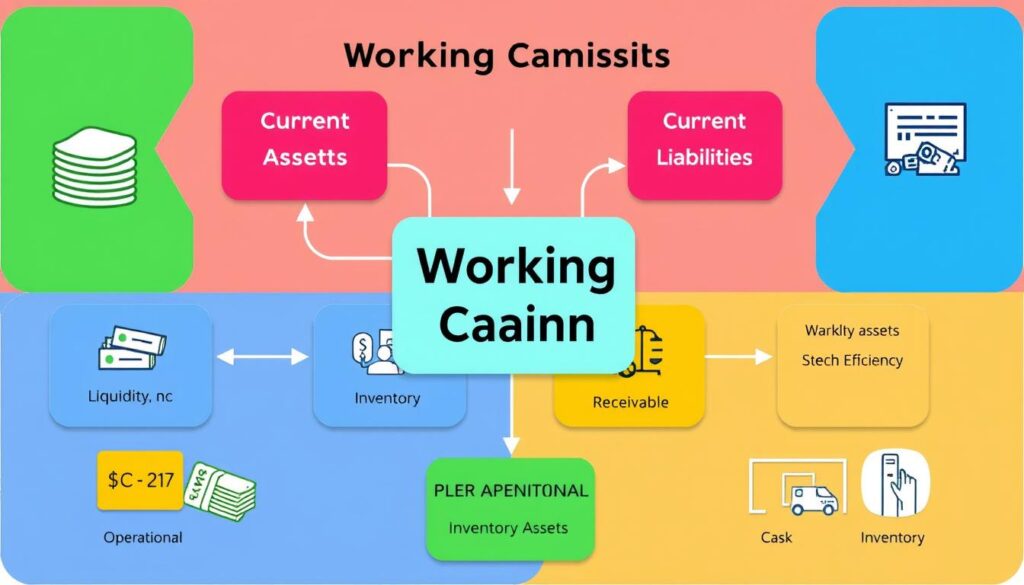
Knowing about different working capital types is key for businesses to handle their short-term money needs well. Permanent working capital is the base, showing the least amount of resources needed for ongoing operations. It helps a company keep its main functions going, even when the market changes.
Fluctuating working capital, however, changes with the seasons and market shifts. This lets businesses adjust to different needs all year without using too many resources.
Gross working capital includes all current assets like cash, accounts receivable, and inventory. It gives a full picture of a company’s short-term financial health. Net working capital, which is current assets minus current liabilities, shows if a company can pay its immediate debts.
| Working Capital Type | Description | Strategic Impact |
|---|---|---|
| Permanent | Base level resources for continuous operations | Ensures operational stability |
| Fluctuating | Varies with seasonal trends and market conditions | Enables flexibility in resource allocation |
| Gross | Total current assets | Provides comprehensive financial overview |
| Net | Current assets minus current liabilities | Indicates short-term financial health |
By wisely managing these working capital types, businesses can better use their resources. This improves financial planning and keeps a good balance between being liquid and profitable. Such a strategy helps meet both short-term needs and long-term goals.
Essential Working Capital Management Ratios
Managing working capital is key to a business’s success. Three important ratios are crucial for financial analysis: the working capital ratio, collection ratio, and inventory turnover ratio. These metrics help understand a company’s financial health and operational efficiency.
The working capital ratio, also known as the current ratio, shows a company’s ability to meet short-term debts. It’s found by dividing current assets by current liabilities. A ratio between 1.5 and 2.0 is usually seen as ideal. A ratio under 1 might show liquidity problems, while a very high ratio could mean resources are not being used well.
The collection ratio, or days sales outstanding (DSO), looks at how well a company handles accounts receivable. It shows the average time to collect payment after a sale. A lower DSO means quicker cash collection, which is good for working capital management.
The inventory turnover ratio checks how well a company manages its inventory. It’s found by dividing the cost of goods sold by average inventory. A higher ratio means better inventory management and faster sales.
| Ratio | Formula | Ideal Range |
|---|---|---|
| Working Capital Ratio | Current Assets / Current Liabilities | 1.5 – 2.0 |
| Collection Ratio (DSO) | (Accounts Receivable / Annual Revenue) × 365 | Lower is better |
| Inventory Turnover Ratio | Cost of Goods Sold / Average Inventory | Higher is better |
By keeping an eye on these ratios, businesses can better manage their working capital. This can lead to improved financial performance overall.
Risks of Inadequate Working Capital Management
Inadequate working capital management is a big risk for businesses, especially in construction. A study found that 100% of failed construction firms ran out of money. This shows how important good cash flow management is.
Cash flow problems are a big worry. Without good management, businesses might not pay suppliers or meet payroll. This can hurt their finances and relationships with important people. In construction, where profits are thin, poor working capital management is especially harmful.
High borrowing costs are another big risk. When cash is low, companies might borrow more. This can cut into profits and lead to high interest rates and defaults. Construction faces extra challenges because it often can’t get growth capital from public markets.
- Missed growth opportunities due to lack of resources
- Difficulty in meeting targets and operating inefficiently
- Deterioration of profitability and loss of reputation
Poor working capital management can hurt a company’s reputation. It can also affect customer and supplier satisfaction. This limits growth and innovation, making it hard to invest in new projects or take advantage of good market conditions.
“Inadequate working capital is the highest risk factor in the contracting business.”
To avoid these risks, businesses need to manage their cash flow well. They should make financial plans and adjust them as needed. This helps predict cash needs and check if new contracts are possible. Without these steps, companies might face cash shortages and could even close down.
Impact on Business Growth and Sustainability
Poor working capital management can really slow down a company’s growth. Without enough funds, businesses can’t invest in new projects. This leads to a standstill and missed chances.
A 2024 British Business Bank report shows that small businesses often look for outside help for cash flow. This shows how important working capital is for keeping a business stable and growing.
Inefficient working capital management can cause problems like:
- Disrupted production cycles
- Delayed payments to suppliers
- Strained business relationships
- Inability to meet day-to-day operational needs
Companies without enough working capital struggle to use their assets well. This can lower profits. It can also hurt the company’s reputation and lead to tougher terms from suppliers and lenders.
But, good working capital management, with the right financing, can help a business stay ahead. It keeps operations running smoothly, debts paid on time, and cash flowing well. These are key for lasting success in today’s fast-changing business world.
Working Capital Optimization Strategies
Smart businesses know that optimizing working capital is key to success. Cash flow forecasting is crucial in this process. It helps predict future cash needs, avoiding shortfalls and making informed decisions.
Implementing a robust forecasting system lets businesses spot potential issues early. This is vital for success.
Supplier negotiations are another vital strategy. Getting favorable terms, like extended payment periods or bulk discounts, can improve cash flow. This not only boosts working capital but also strengthens supplier relationships.
Effective credit policies are key for managing accounts receivable. Clear terms and prompt follow-up on overdue payments ensure a steady cash influx. This is crucial, as 82% of small businesses fail due to cash flow issues.
Financial planning is the backbone of working capital optimization. It involves balancing current assets and liabilities, reducing excess inventory, and establishing relationships with lenders for financial safety nets. By focusing on these areas, companies can free up cash and gain a competitive edge.
| Optimization Strategy | Benefit |
|---|---|
| Cash Flow Forecasting | Anticipate shortfalls, make informed decisions |
| Supplier Negotiations | Improve cash flow, build strong relationships |
| Credit Policies | Ensure steady cash influx, reduce bad debts |
| Financial Planning | Balance assets and liabilities, free up cash |
Businesses that master these strategies can optimize their working capital. This leads to improved efficiency, reduced costs, and enhanced growth potential. Remember, effective working capital management is not just about survival – it’s about thriving in a competitive market.
Inventory Management Best Practices
Smart inventory management is key to working capital success. Companies can boost their supply chain efficiency by adopting just-in-time inventory systems. This approach cuts excess stock and frees up cash for other uses. Effective forecasting helps predict demand, allowing businesses to keep the right amount of inventory on hand.
Stock optimization is crucial for balancing customer needs and capital tie-ups. Regular reviews of inventory levels help companies adjust to market changes. By focusing on inventory turnover, businesses can ensure they’re not holding onto goods for too long. A higher turnover rate often signals better cash flow and stock management.
Here are some top inventory management practices:
- Use data analytics to predict demand
- Implement automatic reorder points
- Conduct regular stock audits
- Categorize inventory by importance and turnover rate
- Train staff on proper inventory handling
These strategies help minimize costs and risks while avoiding unnecessary stockpiles. By mastering inventory management, companies can improve their working capital position and overall financial health. Remember, the goal is to have enough stock to meet customer needs without tying up too much capital in unsold goods.
Accounts Receivable and Payable Management
Managing accounts receivable and payable well is key to better working capital. Companies can speed up cash flow by collecting payments quickly and getting good credit terms from suppliers. Finding the right balance is essential for good supplier relationships and keeping cash flow strong.
For accounts receivable, offering early payment discounts can help get money faster. Using digital invoices also speeds up payments. On the other side, getting longer payment terms from suppliers can really help with cash flow.
Take ABC Electronics, a retail company that extended payment terms from 30 to 60 days. This move helped them keep cash longer, improving their working capital. Such strategies are great for midsize businesses with limited resources and cash flow issues.
“Balancing accounts receivable and payable is like walking a tightrope. It requires precision, focus, and constant adjustments to maintain stability.”
To manage working capital well, companies should watch key metrics like payables and receivables turnover, and current and quick ratios. These numbers show how liquid and efficient a company is. Here are some typical ranges for these metrics:
| Metric | Healthy Range | Interpretation |
|---|---|---|
| Current Ratio | 1.5 – 3.0 | Ability to cover short-term liabilities |
| Quick Ratio | 1.0 – 1.5 | Immediate liquidity position |
| Receivables Turnover | 8 – 12 | Efficiency in collecting payments |
| Payables Turnover | 10 – 15 | Timeliness of paying suppliers |
By improving accounts receivable and payable management, businesses can greatly improve their working capital and financial health.
Role of Technology in Working Capital Management
Technology has changed how we manage working capital. Financial software makes tasks like invoicing and payments easier. This means fewer mistakes and faster money flow.
Data analytics tools give us instant financial health updates. They help us understand trends, making better choices about what to stock and when to pay. This keeps our working capital just right.
Now, companies talk to suppliers and customers in new ways. Online payment systems, for example, cut down payment time. A study showed a 20% drop in Days Sales Outstanding (DSO) for those using them.
ERP systems are key for managing working capital well. They show us what’s in stock, handle credit, and forecast cash. Yet, many only use basic parts, missing out on full benefits.
“Technology is not just an enabler, but a game-changer in working capital management. It allows businesses to be proactive rather than reactive.”
AI and machine learning are taking it to the next level. They can spot cash flow issues early, helping us act fast. They also help us manage stock better, avoiding too much or too little.
Using technology in working capital management is essential today. It’s not just a choice; it’s a must for staying ahead and financially strong in our fast world.
Conclusion
Working capital management is key for business success. It’s not just about balancing the books. It’s about keeping finances stable and finding growth chances.
Companies like Walmart have mastered negative working capital. They turn quick stock turnover into a competitive edge.
Managing working capital well can make or break a business. Fast-growing companies use negative working capital for strategic investments. But, it’s risky. It can fuel growth but also limit innovation and expansion if not managed right.
To avoid working capital problems, businesses must stay alert. They should track ratios, automate processes, and optimize inventory. The goal isn’t always positive working capital. It’s about finding the right balance for your business.
By prioritizing working capital management, companies can secure their financial future. They can thrive in today’s competitive world.
FAQ
What is working capital and why is it important?
Working capital is the difference between a company’s current assets and liabilities. It’s key for smooth business operations. It shows the funds available for daily needs. Keeping enough working capital is vital for a business to stay afloat and run efficiently.
What are the key components of working capital management?
Key components include cash, receivables, accounts payable, and inventory management. These are crucial for enough cash flow to cover short-term costs and debts.
What are the different types of working capital?
There are several types like permanent, regular, and fluctuating working capital. Understanding these helps in strategic planning and financial decisions.
What are the important ratios in working capital management?
Important ratios are the working capital ratio, collection ratio, and inventory turnover ratio. They offer insights into a company’s financial health and efficiency.
What risks does inadequate working capital management pose to businesses?
Risks include cash flow disruptions, higher borrowing costs, and missed opportunities. It can also lead to inefficiency, lower profits, and damage to reputation.
How does poor working capital management affect business growth?
It can cause growth stagnation, missed targets, and lower profits. It may also lead to missed opportunities and a damaged reputation, affecting credit and overall performance.
What strategies can companies use to optimize working capital?
Companies can improve working capital through better cash flow forecasting and negotiating with suppliers. Implementing effective credit policies and streamlining accounts receivable are also key. Building strong financial institution relationships can also help.
What are some best practices for inventory management in working capital optimization?
Best practices include just-in-time inventory systems and efficient forecasting. Regularly reviewing and adjusting stock levels is also important. These practices help manage inventory effectively.
How can companies efficiently manage accounts receivable and payable?
Efficient management involves prompt invoice collection and effective credit policies. Negotiating with suppliers and using services like factoring can also help. This improves the cash conversion cycle.
What role does technology play in working capital management?
Technology is crucial for modern working capital management. It includes advanced financial software, automation, and data analytics. Digital platforms also streamline supply chain operations, making management more efficient.
