
How the Stock Market Was Once Run by Carrier Pigeons
Anúncios
Stock Market Was Once Run by Carrier Pigeons, a historical reality that sounds like a fever dream in our current age of fiber-optic high-frequency trading.
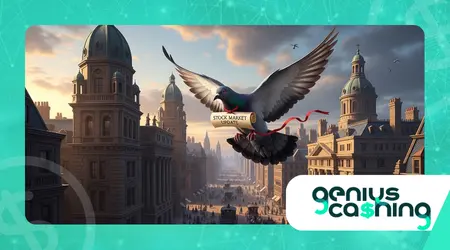
Long before digital dashboards and satellites, the pulse of global finance depended entirely on the wings of birds battling the elements across the English Channel.
In the mid-19th century, information was the most valuable currency, but it traveled only as fast as a horse or a slow-moving steamship.
Financial pioneers realized that whoever bridged the gap between Brussels and Aachen first would control the markets, leading to an feathered arms race.
Chronology of Feathered Finance
- The Speed Gap: Why the early telegraph lines left a critical 100-mile hole in European communication.
- The Reuters Revolution: How a journalist used 45 pigeons to build a news empire that still dominates 2026.
- Biological High-Frequency Trading: The risks and rewards of relying on living creatures for sensitive financial data.
- Legacy of the Bird: How the search for faster data eventually led us to the modern internet infrastructure.
Why did financiers choose birds over humans for data?
The historical truth that the Stock Market Was Once Run by Carrier Pigeons highlights a desperate need for speed in the pre-electric era of 1850.
Anúncios
When the telegraph line between Brussels and Berlin suffered from a massive geographical gap, Paul Julius Reuter saw a golden opportunity.
He didn’t wait for the slow trains to carry stock prices; he hired a fleet of birds to fly the information across the gap.
This provided a two-hour advantage over the railway, allowing his clients to buy or sell before the general public knew the prices.
How did the feathered relay system work?
Agents at the stock exchange would write the latest closing prices on thin tissue paper, rolling them into tiny tubes attached to the pigeon’s legs.
The birds were then released, instinctively flying back to their home lofts where a telegraph operator waited to transmit the data onward.
This was the 19th-century version of a private server link, offering an exclusive data stream to those willing to pay the premium.
It was a brutal, efficient system where the survival of a bird could mean the difference between a fortune and a bankruptcy.
++ When a Goat Was Once Elected to a Company Board — and Got Paid
What were the primary risks of avian data?
Relying on biology meant facing the constant threat of hawks, heavy storms, and the simple physical exhaustion of the pigeons during their flight.
If a pigeon was intercepted or lost, the information gap could lead to catastrophic “blind” trading sessions for the waiting investors.
Despite these dangers, the birds remained the most reliable “low-latency” option until the telegraph lines were finally connected across the entire continent.
The Stock Market Was Once Run by Carrier Pigeons because, at that moment, biology simply outperformed the primitive machines of the industrial revolution.
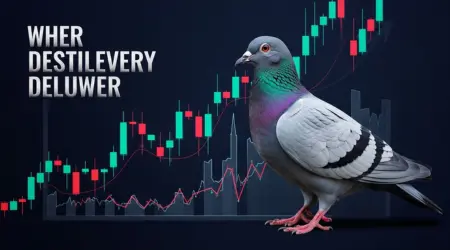
How did this feathered system evolve into modern trading?
As we look back from 2026, the irony is that our current focus on “low latency” is just a high-tech echo of Reuter’s pigeons.
The transition from wings to wires was motivated by the same human greed: the desire to know the truth seconds before anyone else does.
The success of the pigeon post proved that information density and delivery speed were the two most important pillars of any functioning financial market.
This realization directly funded the laying of the first transatlantic cables, as investors sought a “pigeon” that never had to rest.
Also read: The Bizarre History of Life Insurance Policies on Strangers
Why is Reuter’s legacy still relevant in 2026?
The agency founded on pigeon wings is now a global giant that provides the backbone for much of the world’s real-time financial reporting today.
It serves as a reminder that the essence of journalism and finance is the pursuit of verified, rapid truth, regardless of the medium.
Just as a pigeon once beat the train, modern microwave towers now beat traditional fiber-optic cables by a few crucial milliseconds in high-frequency trading.
The Stock Market Was Once Run by Carrier Pigeons, and today it is run by algorithms that share the same predatory instinct for speed.
Read more: How Ancient Egypt Taxed Beer — and Why It Worked
What can we learn from the “Pigeon Protocol”?
This era taught us that the market is not a place, but a network of information flowing between disparate points of human interest.
The pigeons were the first “packets” of data in a decentralized network that would eventually become the internet we use for every trade.
Studying this period reveals that technological shifts are always driven by the need to eliminate the “friction” of physical distance and time.
We are still using the same logic today; we have just replaced the feathers with light and the birds with silicon chips.
What are the most surprising facts about the “Avian Stock Market”?
One fascinating detail of the era is that Stock Market Was Once Run by Carrier Pigeons specifically to exploit the “arbitrage” between different cities.
Arbitrage involves buying low in one market and selling high in another, a practice that required the absolute fastest communication possible.
Without these birds, the price of gold in London and the price of grain in Paris would have remained disconnected for days.
The pigeons acted as the first global “sync” button, forcing the world’s disparate economies to begin acting as a single, unified organism.
How many birds were involved in daily operations?
At the height of the system, Reuter maintained a fleet of over 45 pigeons, each trained to return to specific lofts with pinpoint accuracy.
These birds were treated with the same reverence that modern firms treat their proprietary servers, provided with the best feed and protection.
The cost of maintaining these “biological data links” was immense, ensuring that only the wealthiest elite could access the fastest information.
This created an early version of the “digital divide,” where those with the birds held an almost insurmountable advantage over the common trader.
Did the pigeons ever cause a market crash?
While there are no recorded “pigeon-induced” crashes, there were numerous instances of “information asymmetry” that led to massive wealth transfers in a single afternoon.
If a hawk killed a key pigeon, the market would effectively “freeze” in a state of confusion until the next bird arrived.
Imagine a world where a bird’s wing-beat dictated the wealth of nations; doesn’t that make our current digital volatility seem almost predictable?
The Stock Market Was Once Run by Carrier Pigeons, proving that the history of finance is as much about natural history as it is about math.
Data Transmission Evolution: From Wings to Light
| Communication Era | Average Speed | Primary “Hardware” | Key Risk Factor |
| Pigeon Post (1850) | 50-60 mph | Carrier Pigeons | Hawks and Weather |
| Telegraph (1870) | Near Instant | Copper Wires | Wire Cutting / Storms |
| Radio/Satellite | Light Speed | Radio Waves | Atmospheric Interference |
| Fiber-Optic (2026) | Near Light Speed | Glass Filaments | Physical Cable Breaks |
| Microwave Link | Light Speed | Specialized Towers | Weather/Line of Sight |
The Enduring Wing of Progress
The revelation that the Stock Market Was Once Run by Carrier Pigeons serves as a humble reminder of how far our financial architecture has traveled.
We have moved from the fragile, beating heart of a bird to the cold, silent pulse of a fiber-optic cable, yet the human goal remains unchanged.
We still crave the edge, the second of advance, and the secret knowledge that allows us to outpace our rivals.
Understanding these feathered roots helps us appreciate the complexity and the inherent fragility of the global systems we take for granted in 2026.
As we stare at our digital screens today, it is worth remembering that the “cloud” was once a flock of birds.
The spirit of the pigeon the relentless drive to deliver the truth as fast as nature allows still lives on in every trade we make. Let us respect the humble pigeon as the true ancestor of the modern day trader.
Would you trust a living creature with your financial future, or do you prefer the cold reliability of the algorithm? Share your experience in the comments!
Common Inquiries
How long did the pigeon stock market last?
The “Golden Age” of the pigeon post lasted roughly from 1850 to 1851, until the telegraph lines between major European cities were fully linked.
Once the wires were connected, the pigeons were relegated to backup roles or emergency military use.
Were these pigeons the same as the ones in city parks?
No, these were “Homing Pigeons,” specifically bred and trained for their navigational abilities and stamina.
They have a biological compass that allows them to find their way home from hundreds of miles away, even in unfamiliar territory.
Did other companies use pigeons besides Reuters?
Yes, several private banks and news agencies used birds, but Reuters is the most famous because he used them to systematically bridge a gap in the existing infrastructure.
It was his organization’s primary competitive advantage during its founding years.
Is There Such a Thing as a “Wrong” Universe where pigeons still rule?
While purely speculative, it is a fun thought experiment; however, in our universe, the invention of the electric telegraph was the “natural selection” that pushed the pigeons out of the financial sector and into history books.
Can pigeons still be used for data today?
Technically, yes! In a famous 2009 experiment, a pigeon carrying a 4GB stick of data beat a local ISP’s upload speed.
However, for the microsecond-level requirements of the 2026 stock market, birds are far too slow and unpredictable.